Functional Supramolecular Systems
In this research line we develop and study functional supramolecular systems that can be controlled in their properties by external stimuli. We strive to go beyond the sole establishment of molecular recognition processes and implement responsive elements for smart and emerging behavior.
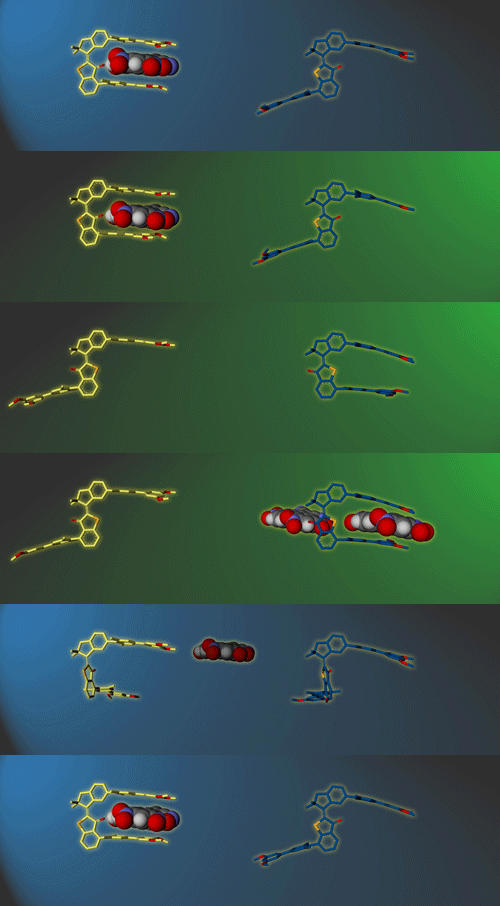
To this end we have created different photoresponsive receptor1 and molecular tweezers motives,2 which we can reversibly switch between high and low affinity states using visible light signals. In a recent effort we were able to elicit a complex and dynamic guest relocation in solution by realizing a new concept: “simultaneous complementary photoswitching”.3 Two complementary substituted molecular tweezers respond to the same wavelength of irradiation in opposite manners. If the first tweezers gain binding affinity the second tweezers lose it at the same time, leading to relocalization of the guest from one host to the other. At a different wavelength of light irradiation the binding affinities and guest residing can be reversed. Only minimal signaling is needed to obtain a multifaceted supramolecular behavior as the result.
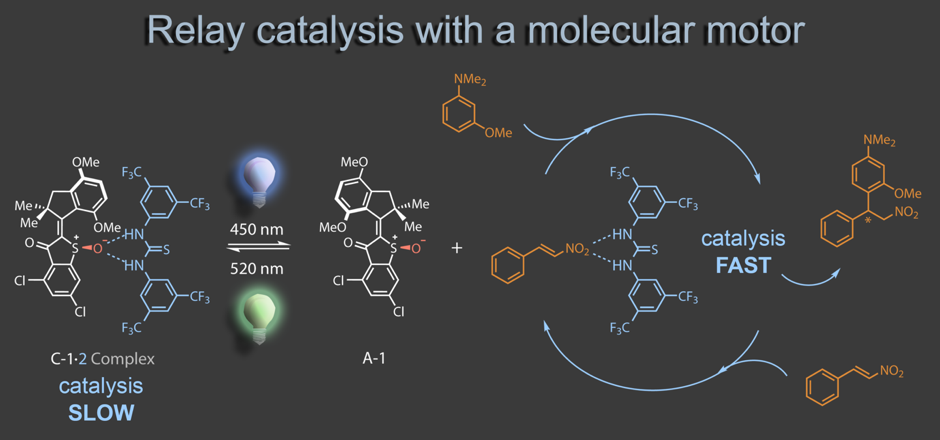
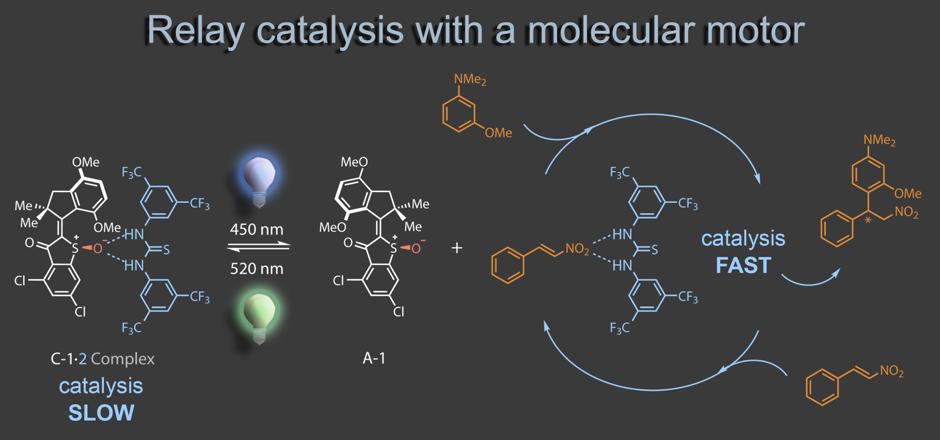
Most recently we started to merge molecular machines with supramolecular chemistry. Using a molecular motor as photoswitchable receptor for hydrogen-bonding organocatalysts the activity of the latter can be made light responsive. In a relay process the organocatalyst can be captured and released from the motor, altering its catalytic activity in a Michael addition reaction. Motor operation thus remote controls catalysis without direct interference.4