
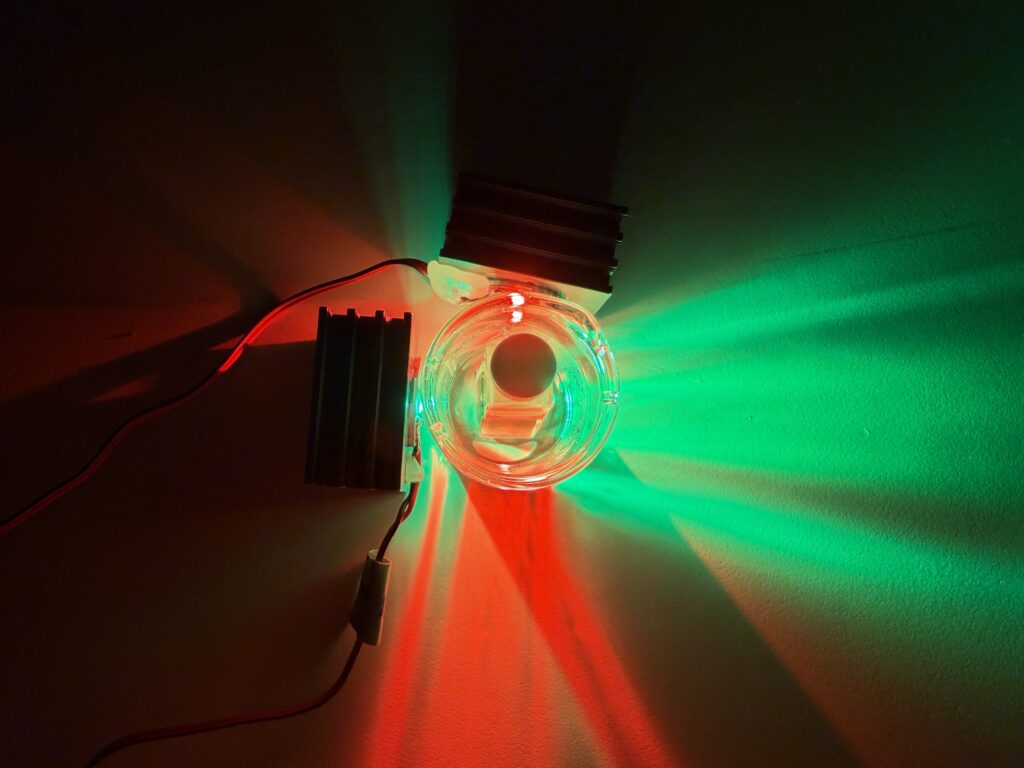
Molecular Motors
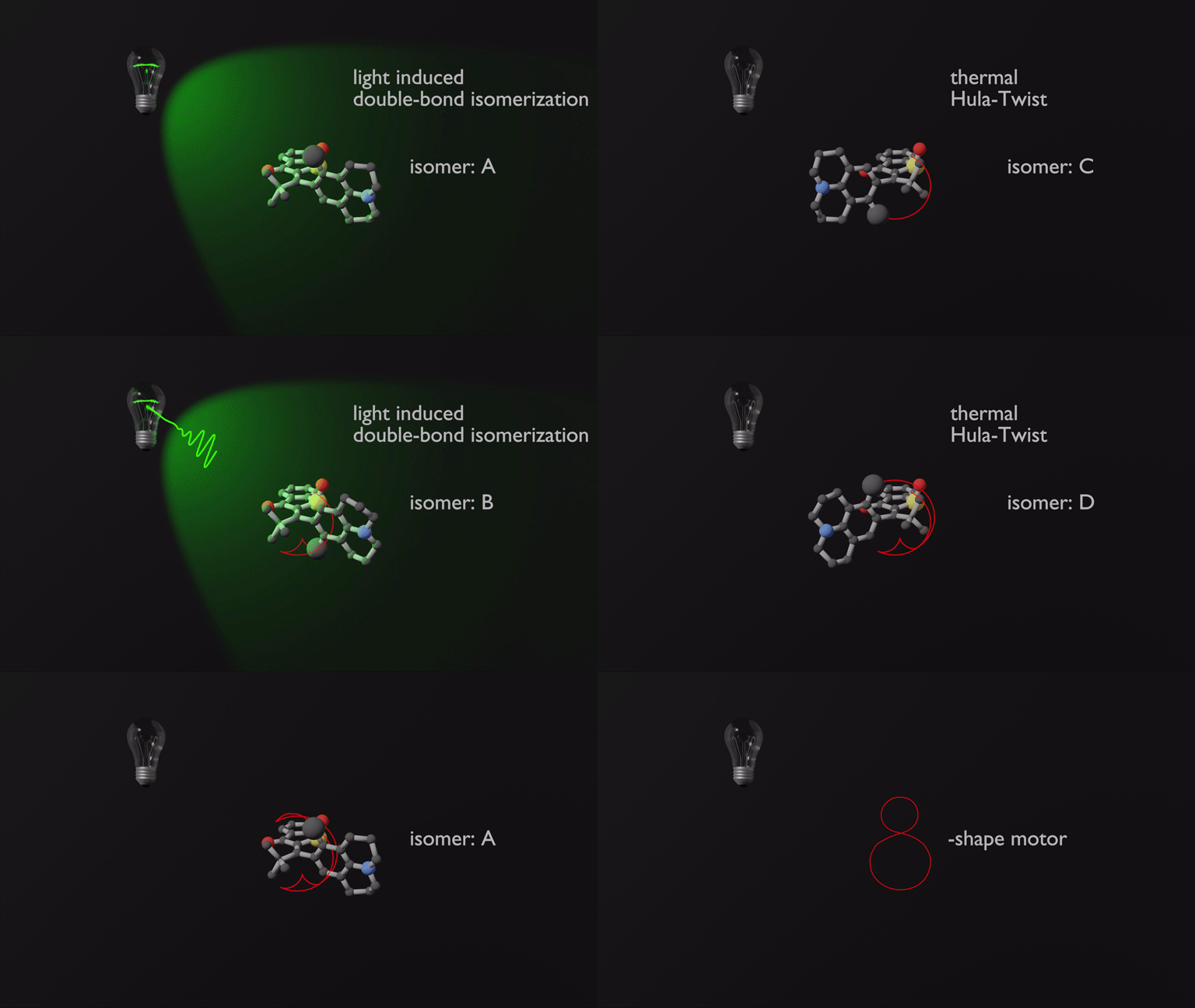
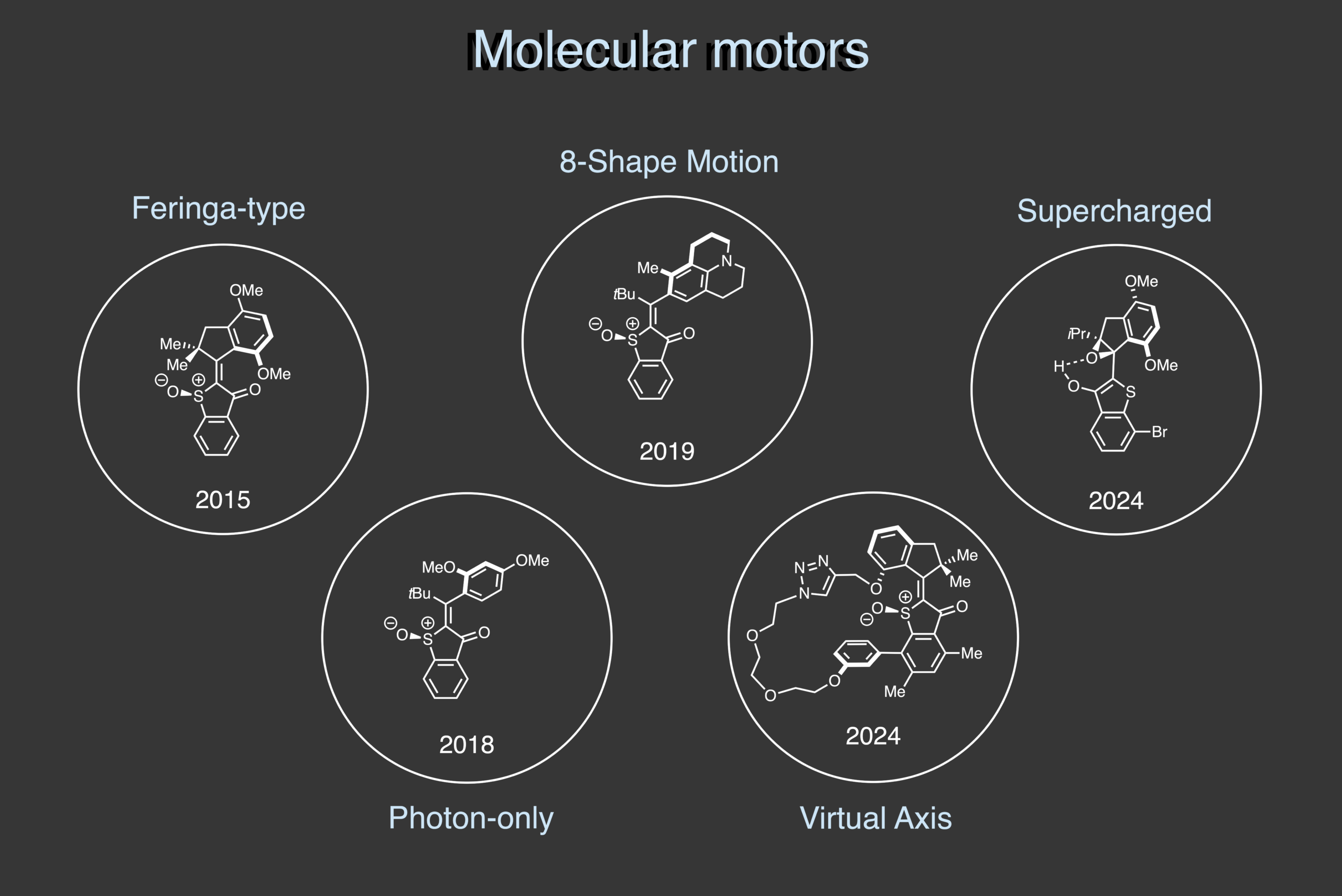
Molecular motors are archetypical molecular machines and provide directional motions in response to energy input. Our group has pioneered five different types of light-driven motors. They are all distinguished by unique motion mechanisms and are powered by visible or sunlight. Highlights include:
Fast rotating heterocyclic motors 1
The first photon-only motor working without thermal steps 2
A motor that provides a complex 8-shaped directional motion 3
A macrocyclic motor rotating around a virtual axis 4
A supercharged motor that harnesses a large amount of light energy 5
2 J. Am. Chem. Soc. 2018, 140, 16442.
3 Nat. Commun. 2019, 10, 4449.
4 J. Am. Chem. Soc. 2024, 146, 23387.
Molecular Gears and Brakes
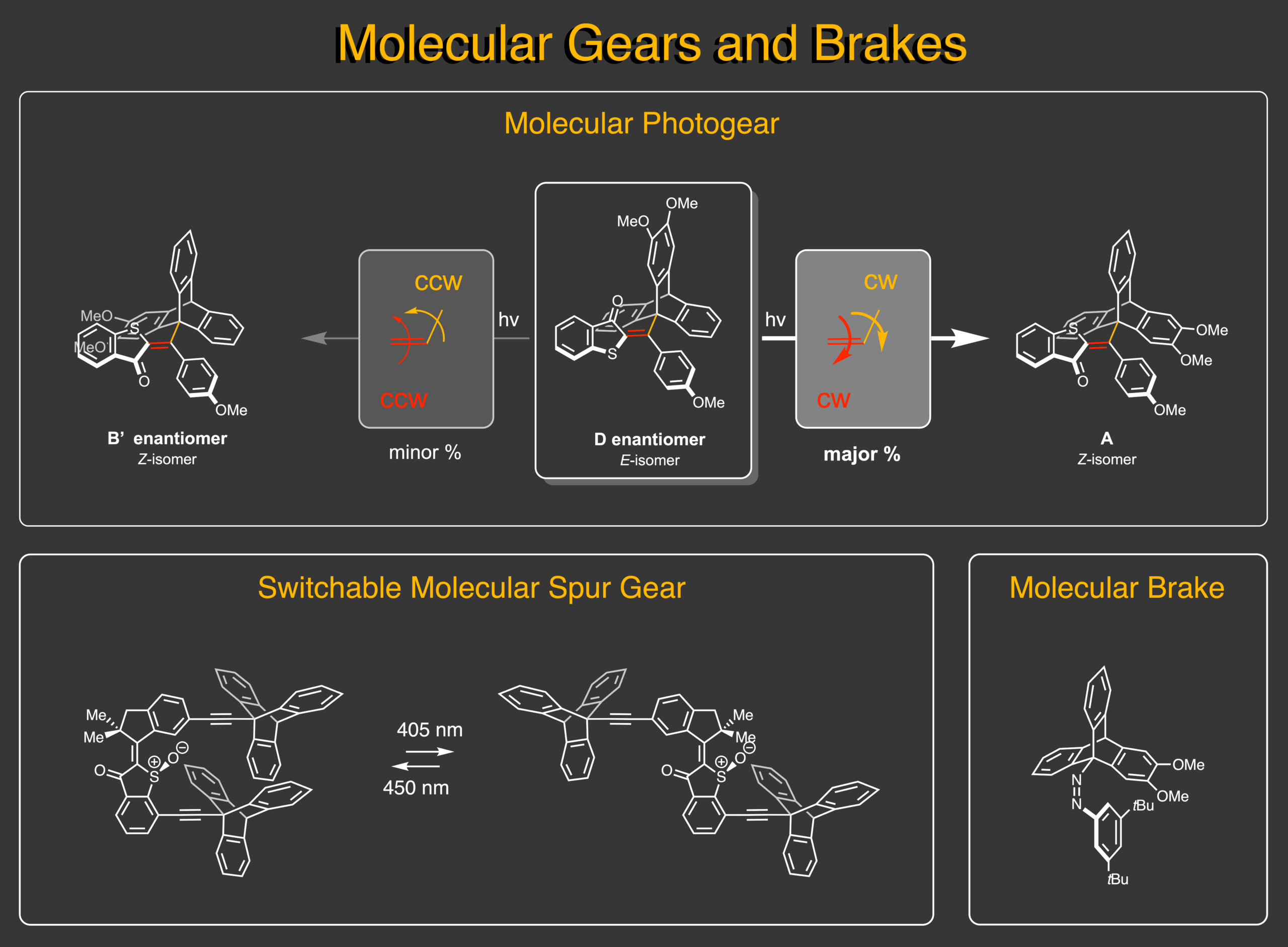
Gears and brakes represent early examples of molecular machinery and have been captured the imagination of researchers for many decades. However, the coupled motions of such molecular gearing systems were restricted to thermally activated modes of motions. They are thus temperature dependent and occur without directional control. Our group has presented the first light-powered molecular gearing system, which we termed photogear.1 Subsequently a directional bias was evidenced for the photogear, which opens up the possibility for constructing a novel piece of molecular machinery: a gearing motor.2 A fundamentally different setup for a gearing motor was developed later, in which three axes of rotation can potentially be controlled unidirectionally by integrating a motor moiety into a light-switchable molecular spur gear.3 The exploration of triptycene-azobenzenes hybrids allowed us to realize a light-switchable molecular brake system, in which the rotation speed of the triptycene propeller can be accelerated or decelerated by five orders of magnitude in rate.4
2 Angew. Chem. Int. Ed. 2024, 63, e202405299.
3 J. Am. Chem. Soc.2026, 148, 25757.
4 Chem. Eur. J. 2024, 30, e202302267.
Integrated Molecular Machines
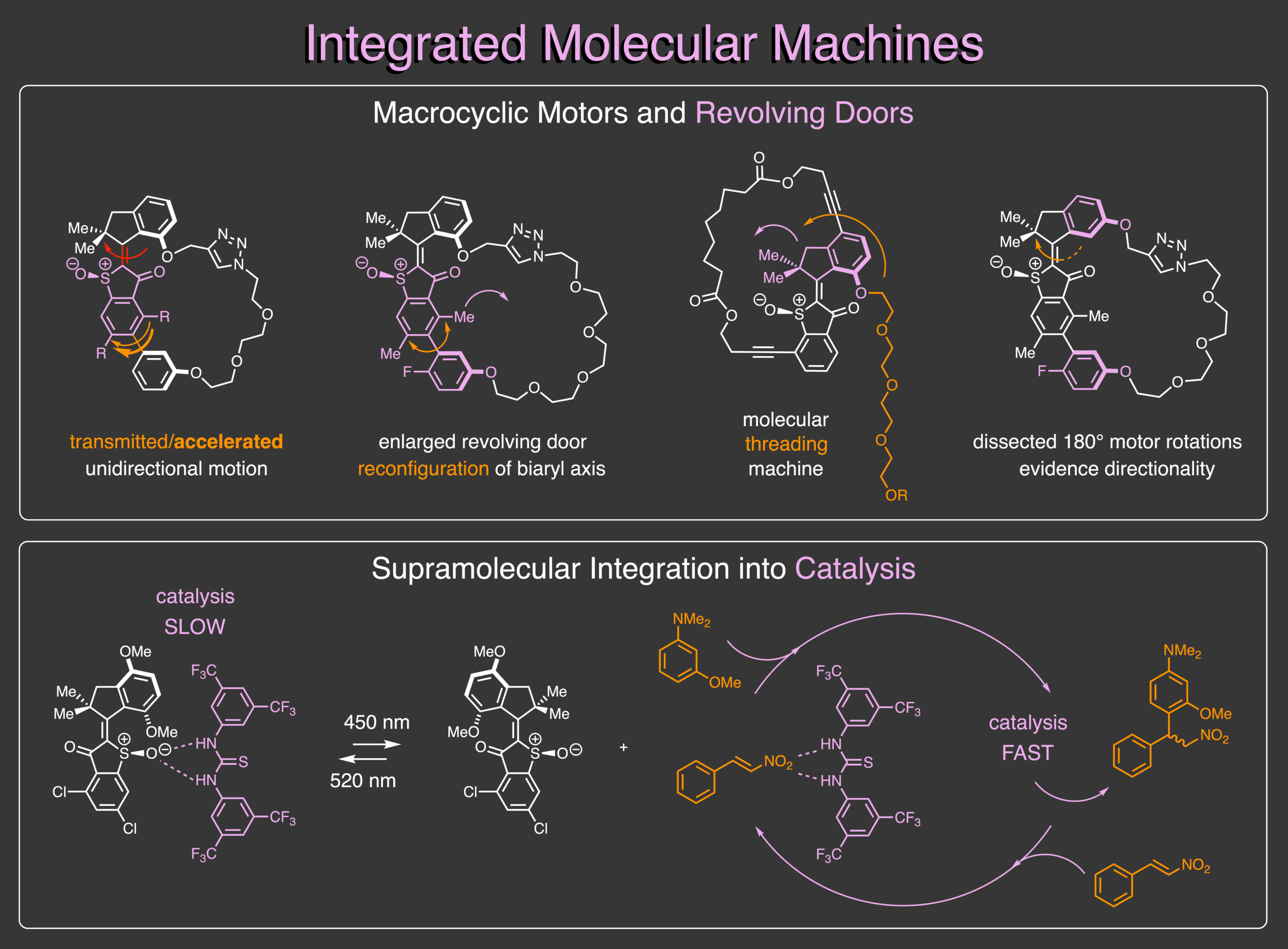
Integrated molecular machines build up capabilities by translating nanoscale motions and use them for actual tasks. In this area our group has brought forward a variety of concepts that explore molecular motors as driving units in complex settings. Using covalent macrocyclic approaches, motor motions can be translated1 and used for acceleration of remote single bond rotation2 or for deciphering motor directionality.3 Multi-configurable directional motions can be controlled in an enlarged macrocyclic setup opening up the possibility for customized machine operations.4
Another breakthrough is the realization of the worlds first molecular threading machine, which threads a nanoscale string through a macrocycle similar to macroscopic sewing and weaving processes.5
In a supramolecular and modular approach, a molecular motor is used in a relay-fashion to remote-control the efficiency of a catalysis reaction.6
1 Angew. Chem. Int. Ed. 2018, 130, 11231.
2 Angew. Chem. Int. Ed. 2020, 132, 5730.
3 Nat. Commun. 2023, 14, 4595.
4 J. Am. Chem. Soc. 2023, 145, 13081.
Indigoid Photoswitches
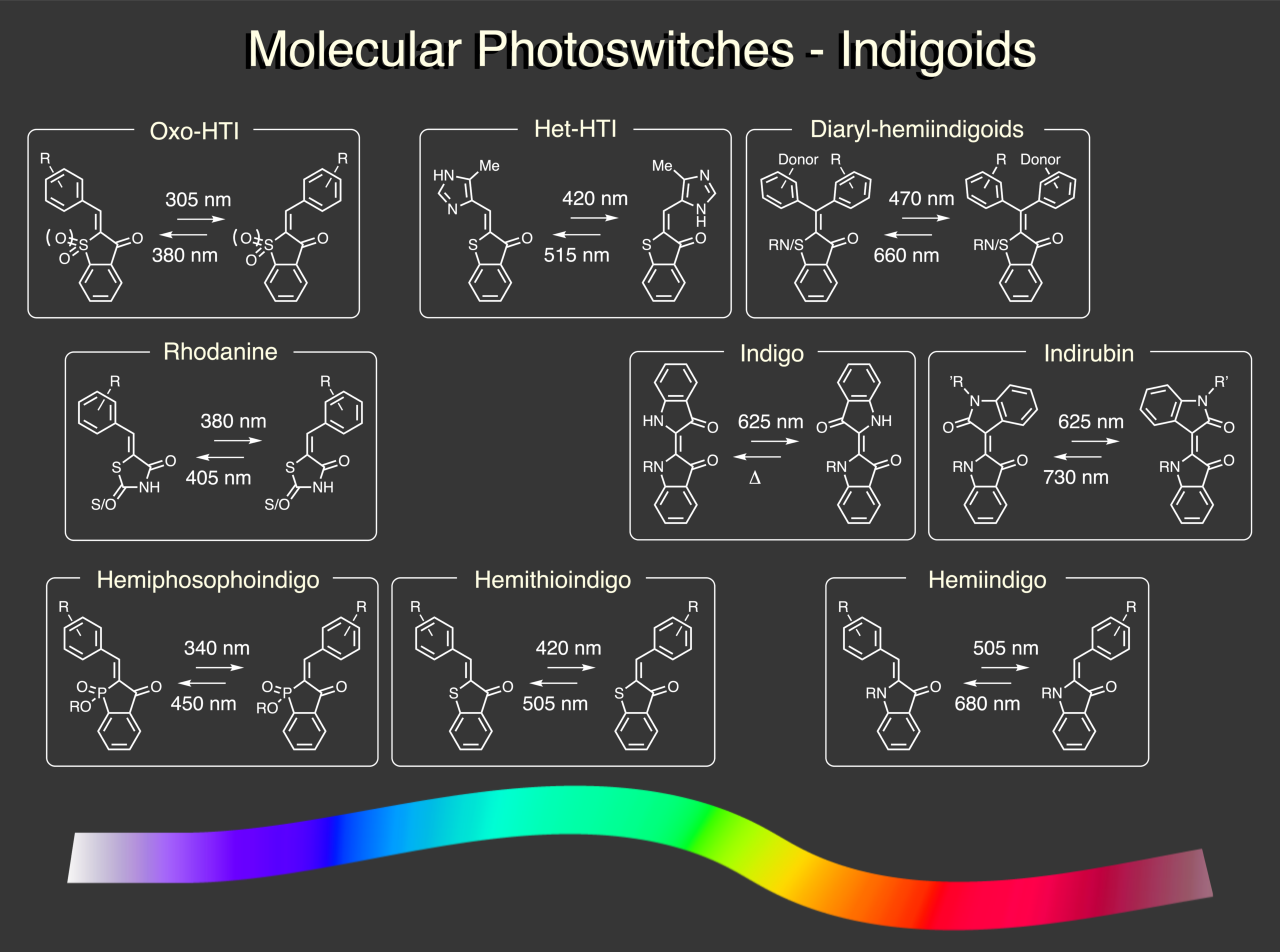
In a main research line we are developing new types of molecular photoswitches. Of particular importance are highly efficient bistable photoswitches with visible, red, and near infrared (NIR) light responsiveness, which are interesting for a variety of applications ranging from material sciences to biology and catalysis. Indigoids have been the main chromophore structures that we explored as photoswitches for many years. Excellent switching performance covering the whole visible spectrum are obtained for heterocyclic hemithioindigo (Het-HTI),1 hemiindigo (HI)2,3and their diaryl-variants (diaryl-HTI4/diaryl-HI5), as well as for novel scaffolds such as indirubin6 and hemiphosphoindigo (HPI).7
1 Angew. Chem. Int. Ed. 2022, 134, e202210855.
2 J. Am. Chem. Soc. 2017, 139, 15060.
3 J. Am. Chem. Soc. 2018, 140, 13558.
5 Nat. Commun. 2023, 14, 4382.
6 J. Am. Chem. Soc. 2021, 143, 18251.
7 Nat. Commun. 2025, 16, 1760.
Near Infrared Photoswitches
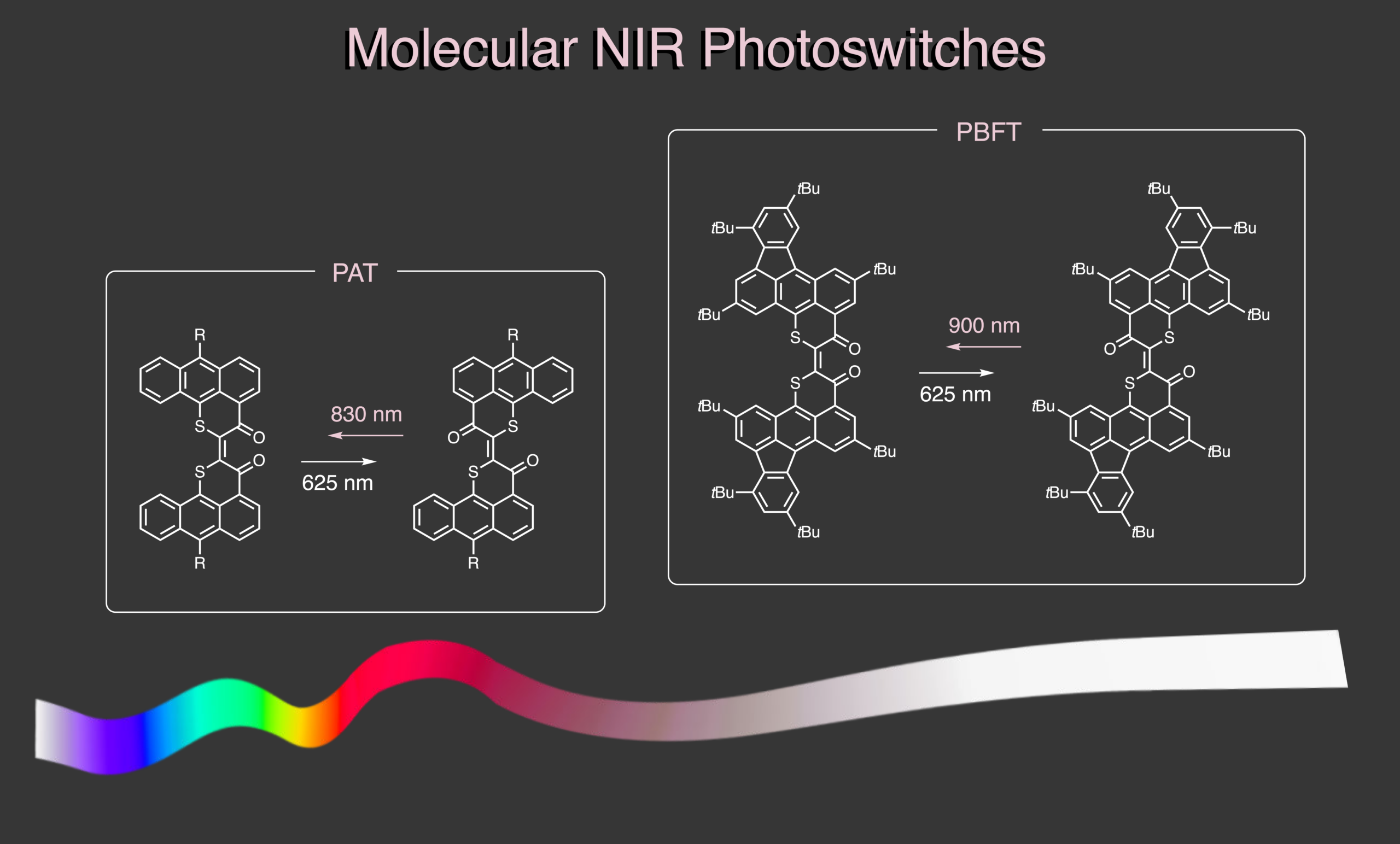
Near infrared (NIR) photoswitching is an emerging hot topic in the field of photochemistry. Moving photoresponsiveness into the NIR spectral realm offers unique opportunities for the development and applications of molecular photochromes. In particular, materials and biological applications benefit tremendously from NIR addressability, allowing for selective and non-damaging irradiation with deep penetration depth of the light into materials or tissues.
Our group has developed groundbreaking molecular photoswitches with excellent NIR responsiveness to drive double bond photoisomerizations. Our peri-thioindigoid scaffolds like peri-anthracenethioindigo (PAT)1,2 and peri-benzo[a]fluoranthenethioindigo (PBFT)3 allow direct excitation with up to 900 nm light, quantitative photoconversions, and strongly contrasting color changes. Using these outstanding performances of peri-thioindigoids, we could establish unique applications in materials and truly orthogonal and path-independent photoswitching. With PAT, four-color photoswitching in 2D materials could be shown.4 With PBFT, NIR-sensors and light-rewritable 2D and 3D volumetric displays could be established.3
1 Angew. Chem. Int. Ed. 2023, e202312955.
2 Angew. Chem. Int. Ed. 2025, e202510626.
One core activity in our research concerns chromophore design and mechanistic studies to develop new photoresponsive molecules with unique property profiles. Our long-term goal is gaining absolute control over light-induced molecular motions enabling full spatial and temporal resolution of nano-, micro-, and macroscopic properties.
Hula Twist Photoreaction
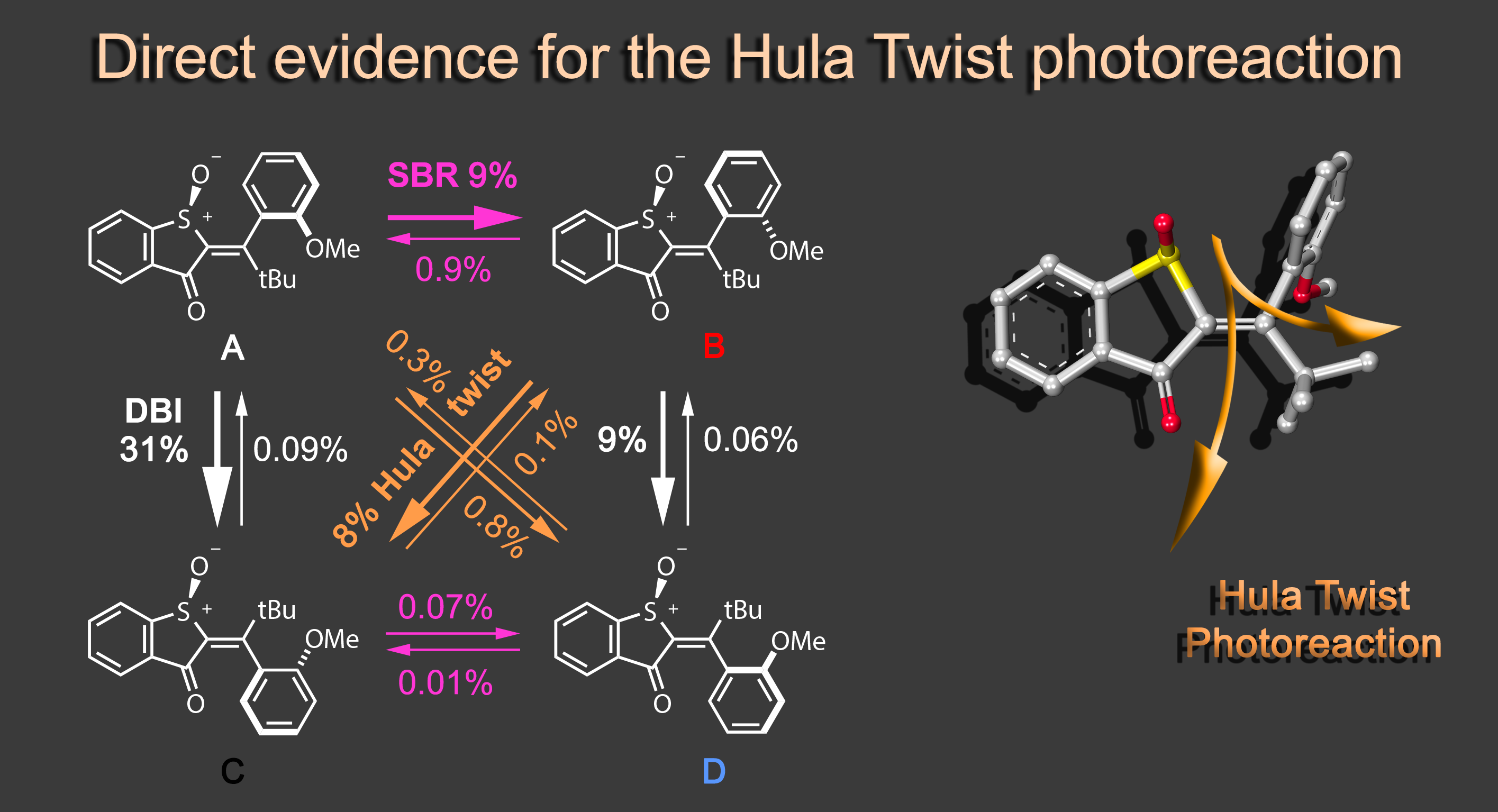
Focusing on the underexplored class of indigoid photoswitches1 we have established specific molecular designs, which allow us to evoke a range of distinctive bond rotations by irradiation and directly prove them experimentally. Using simple means, like solvent polarity or temperature, different types of such rotations can be interchanged within the same molecule providing exquisite control over multiple molecular motions. Examples are polarity dependent single or double-bond rotation in donor-substituted hemithioindigo2 or the long elusive hula twist, which we evidenced unambiguously in an axially chiral molecular setup.3 This hula twist photoreaction was subsequently studied in a combined effort including ultrafast spectroscopy and excited state theory to gain the first deep insights into its mechanism and the competition with other deexcitation pathways such as TICT formation.4
Dual Single Bond Rotation
We also discovered a hitherto unknown photoreaction – a dual single bond rotation (DSBR) – in which two adjacent single bonds are rotating at the same time upon light irradiation. We use this photoreaction to control the sequential switching of a compact hemithioindigo multi-photoswitch to interchange between a highly selective eight-fold isomer interconversion and a five-fold interconversion. In the different switching sequences hula twist or DSBR photoreactions are followed by thermal single bond rotations (SBR). With this new photoswitching concept an unprecedented density of accessible states and very high control over molecular motions within a simple molecular framework is demonstrated.5
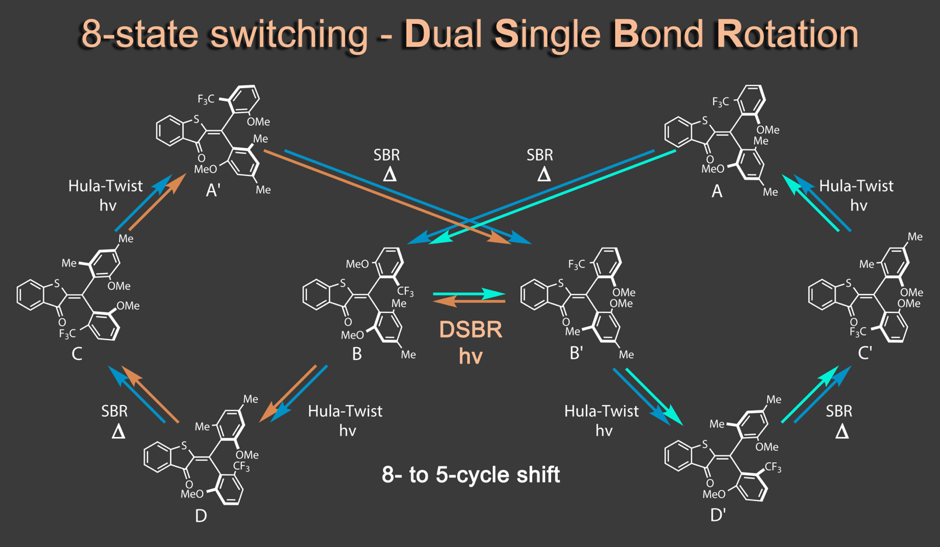
Apart from providing unprecedented insights into fundamental photochemical mechanisms these molecular systems possess especially high potential for the construction of unique future nanomachinery.
Hetero-Diels Alder and Oxygen Rearrangement
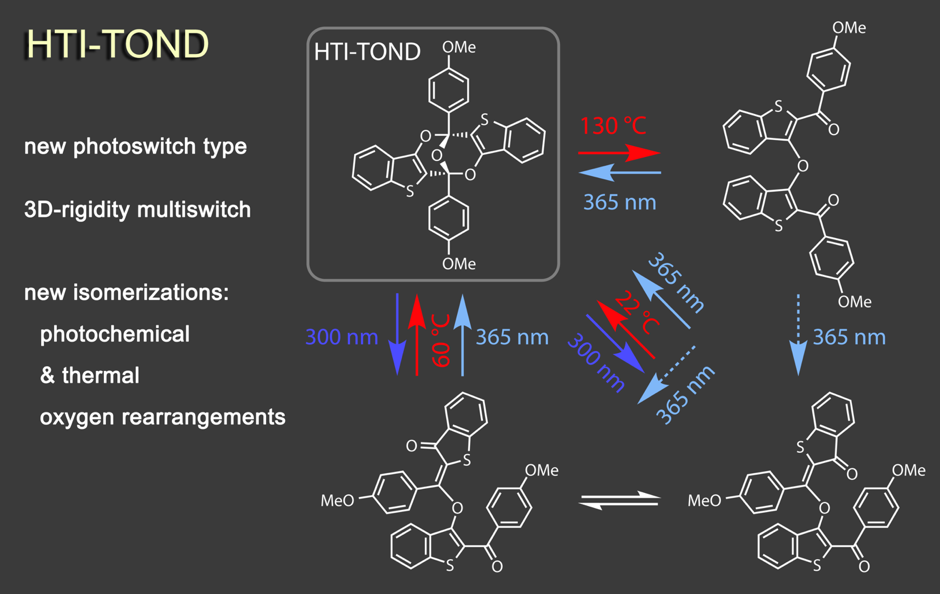
A suite of unique photochemical reactions is found within the trioxobicyclononadiene (TOND) architecture, which we have discovered to be a capable multi-state photoswitch.6 This rigid 3-dimensional structure interconverts with three additional isomers by unusual hetero-Diels Alder photoreactions as well as by hitherto unknown oxygen-rearrangement reactions. TOND photoswitches offer a rare combination of concomitant strong geometric and electronic changes upon switching and an intrinsic four-state nature. They thus provide unique opportunities for the creation of light responsive molecular systems and their applications.
1 Acc. Chem. Res. 2018, 51, 1153.
2 J. Am. Chem. Soc. 2016, 138, 12219.
4 J. Am. Chem. Soc. 2023, 145, 14811.
5 J. Am. Chem. Soc. 2022, 144, 3029.
6 J. Am. Chem. Soc. 2022, 144, 2847.
Aza-Diarylethene and Zwitterion Formation
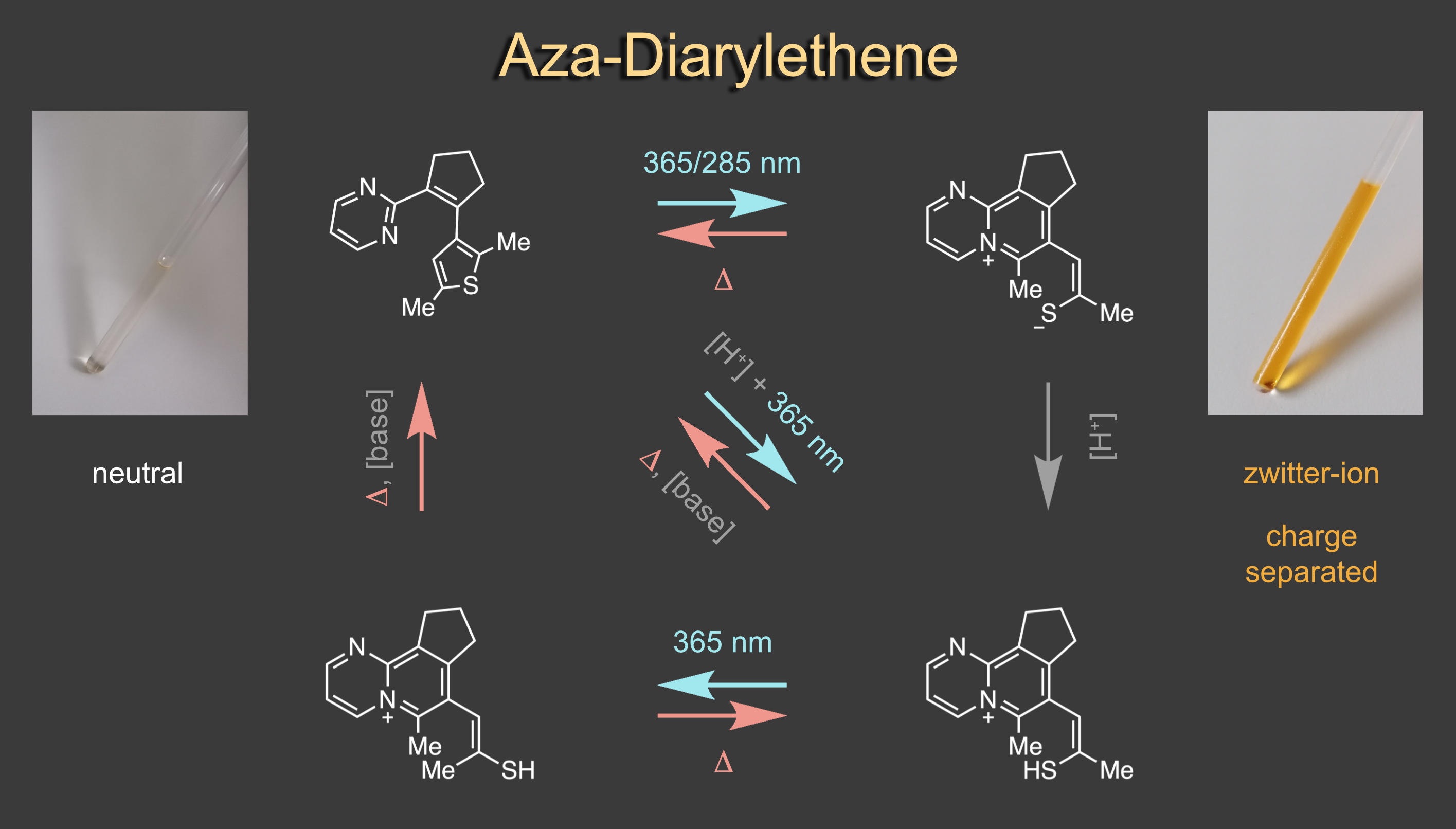
Diarylethenes are widely established and highly potent photoswitches which form carbon-carbon bonds in an electrocyclic photoreaction. We got interested in the idea to form carbon-nitrogen bonds instead in the related aza-diarylethene derivatives. In a minimal molecular setup using pyrimidine substitution we discovered a reversible light induced zwitterion formation and concomitant aromatization reaction.1 The zwitterionic product shows negative solvatochromism and reverts completely back to the open aza-diarylethene in a thermally activated process. Thermal stability of the metastable state can be strongly modulated by acid and base additions, allowing to change the T-type photochromism deliberately. With this behaviour aza-diarylethene bridges the behaviours of diarylethenes and merocyanine photoswitches and provides unique photochemical control over charge separation and molecular structure.
The exposed thiolate function of aza-diarylethenes zwitterion provides a unique reactivity to the metastable switching state. We used it in a first application for photoinitiation of a polymerisation reactions. In conjunction with a second diaryl-hemiindigo photoswitch a fully photonic and multi-functional smart material could be crafted. The material allows to use UV light for polymerisation in the presence of the second photoswitch, which provides visible-light responsive photochromism to the resulting solid.2
The second generation of our aza-diarylethenes provides fully reversible photoswitching as well as high-performant three-state photoswitching including double bond photoisomerizations of the zwitterionic states. At the same time a high percentage of the provided light energy is harnessed in the metastable state and photoinitiation of polymerisation is markedly enhanced.3
1 J. Am. Chem. Soc. 2024, 146, 9575.
 1/1
1/1In this research line we develop and study functional supramolecular systems that can be controlled in their properties by external stimuli. We strive to go beyond the sole establishment of molecular recognition processes and implement responsive elements for smart and emerging behavior.
Molecular Tweezers
We have created different photoresponsive receptor1 and molecular tweezers motives,2 which we can reversibly switch between high and low affinity states using visible light signals. In a recent effort we were able to elicit a complex and dynamic guest relocation in solution by realizing a new concept: “simultaneous complementary photoswitching”.3 Two complementary substituted molecular tweezers respond to the same wavelength of irradiation in opposite manners. If the first tweezers gain binding affinity the second tweezers lose it at the same time, leading to relocalization of the guest from one host to the other. At a different wavelength of light irradiation the binding affinities and guest residing can be reversed. Only minimal signaling is needed to obtain a multifaceted supramolecular behavior as the result.
Relay Catalysis
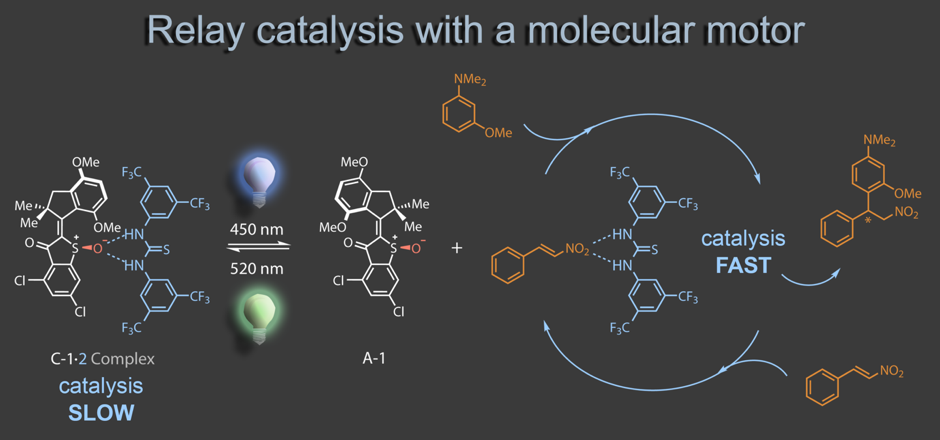
Further, we started to merge molecular machines with supramolecular chemistry. Using a molecular motor as photoswitchable receptor for hydrogen-bonding organocatalysts the activity of the latter can be made light responsive. In a relay process the organocatalyst can be captured and released from the motor, altering its catalytic activity in a Michael addition reaction. Motor operation thus remote controls catalysis without direct interference.4
Molecular Confinement
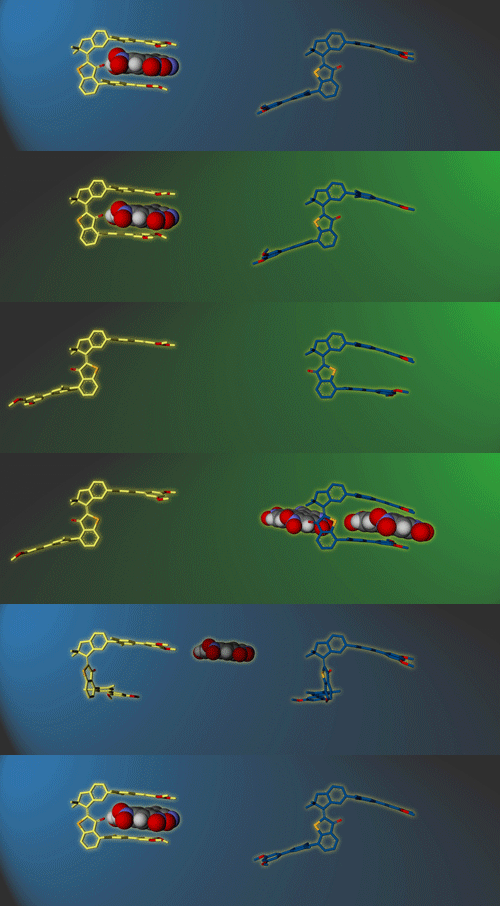
A more recent addition is the deliberate use of molecular confinement in order to elicit advanced photonic behaviour. A flexibly linked molecular photoswitch and chirality inducer moiety show now chiral transmission or chiroptical switching when free in solution. However, upon confinement inside the nanometer space of Atwood’s molecular capsule, folding and change of properties are induced. Now the chiral information is transmitted to and amplified at the photoswitch allowing for reversible light-controlled chiroptics changes. Supramolecular guest exchange using a competing tetralkylammonium salt allows to reset the system.5 This concept is transferrable to other photoswitches and openes a new avenue ensue photochromic systems with elaborate functions and multiple levels of control.
1 Chem. Eur. J. 2016, 22, 16433.
In this research line we develop advanced chemical biology tools for precision regulation of biological processes. For an in-depth characterization of the biological effects we work closely together with the Zanin lab.
Proteasome Inhibition
We have provided a photocaged version of the versatile proteasome inhibitor MG132 by effectively masking its reactive aldehyde function while keeping the oxidation state unchanged. Upon caging bioactivity is lost and cells proliferate normally. Irradiation releases the inhibitor at a given time and leads to metaphase arrest of the cells. Prolonged exposure causes the apoptosis pathway to be activated and blue light treated cells die. Our light-activated biomolecular tool therefore enables spatial-temporal control of cell fate and was further shown to be compatible with live-cell imaging methods.1
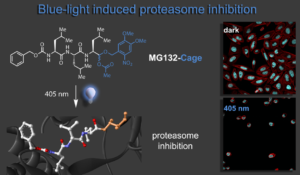
The next generation of photocaged proteasome inhibitors provides a broad scale of opportunities due to their multi-functionality and enhanced security. Using a different caging approach with a chelating diol extreme hydrolytic stability is obtained, which eliminates spontaneous decaging in the dark. An added click-functionality at the other end of the molecule allows to introduce different secondary functions without loss of photopharmacological utility. This is showcased by introducing a fluorophore allowing to track the position of the inhibitor within living cells. A number of dedicated biological assays evidences direct proteasome targeting by downstream effects on cyclin B.2
PIM Kinase Inhibition
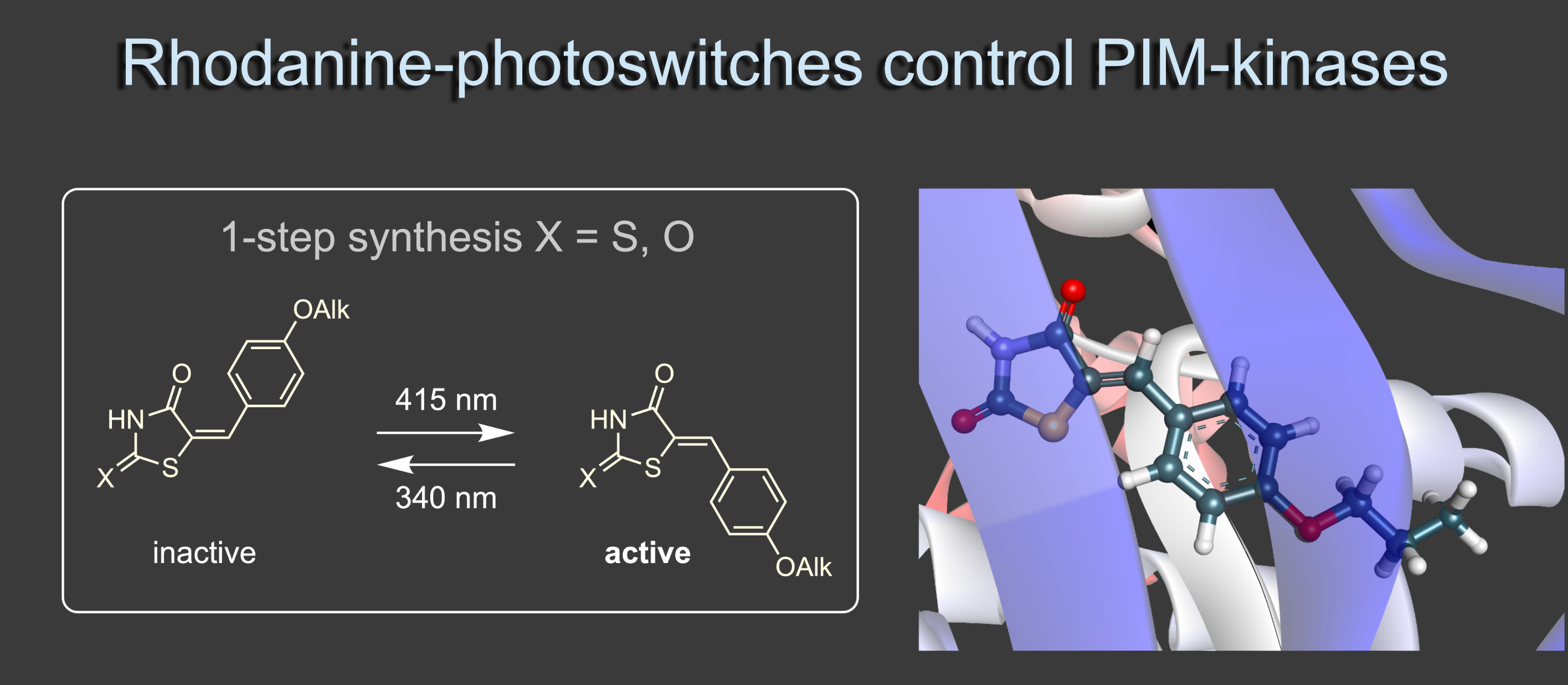
In another approach we use the reversible photoresponse of indigoid chromophores to modulate inhibition of enzymes vital for cell survival. Rhodanine-based chromophores are ubiquitous molecular structures in different applied fields of chemistry ranging from materials to solar cells and bioactive compounds. We have demonstrated how photoswitching can be elevated to high performance and how rhodanines can be used as advanced photopharmacology tools. In this regard we showed that a known inhibitor of PIM-1 kinase can be strongly photomodulated in its activity allowing for light-controlled apoptosis induction in cancer cells. We also found new derivatives as candidates for potent PIM-1 kinase inhibitors.3
1 Angew. Chem. Int. Ed. 2021, 60, 1187.