
Curriculum Vitae
Education and research experience | ||
| 2020 – present | WISNA Professor for Sensory Sciences | FAU Erlangen-Nürnberg, Erlangen, Germany |
| 2020 | Postdoctoral research associate | McGovern Institute for Brain Research Research Laboratory of Electronics (RLE) Massachusetts Institute of Technology Cambridge, USA |
| 2016 | PhD in Molecular Biology and Biomedicine | CIC biomaGUNE, San Sebastian, Spain |
| 2010 | MSc in Applied Chemistry | University of Zagreb, Zagreb, Croatia |
| 2008 | BSc and Engineering in Chemistry, Materials and Ecology | University of Zagreb, Zagreb, Croatia |
Research visits | ||
| 2014 | Visiting scientist | ZIK HIKE, Greifswald, Germany |
| 2014 | Marie Curie fellow | INIFTA, La Plata, Argentina |
Memberships and panel activities
| ||
| 2024 – present | Member of the Competence Center Engineering of Advanced Materials | FAU Erlangen-Nürnberg, Erlangen, Germany |
| 2023 – present | Board member of the Optical Imaging Center Erlangen (OICE) | FAU Erlangen-Nürnberg, Erlangen, Germany |
| 2023 – present | Founding member of the Research Center New Bioactive Compounds (NeW) | FAU Erlangen-Nürnberg, Erlangen, Germany |
| 2023 – present | Mentor for fellows of Max Weber Program | Elitenetzwerk Bayern, Germany |
| 2023 – present | Member of the scientific evaluation panel of the Horizon Europe, MSCA Postdoctoral Fellowships | European Commission |
| 2022 – present | Member of the scientific evaluation panel of the Portuguese national funding agency for science, research, and technology | Fundação para a Ciência e a Tecnologia, Portugal |
| 2022 – present | Reviewer for Humboldt Research Fellowships | Alexander von Humboldt Stiftung, Germany |
| 2021 | Committee Member for the appointment of W1 professorship in Physical Chemistry | FAU Erlangen-Nürnberg, Erlangen, Germany |
Academic Career
After her MSc degree in applied chemistry at the University of Zagreb (Croatia), Danijela started her PhD in 2011 at the biomaterials research center biomaGUNE (Spain) with Dr. Moya. Her primary focus was on the design of biocompatible and bioresponsive inorganic interfaces that resemble extracellular matrix. She used these materials to study how chemical, physical, and mechanical properties of the materials govern interactions with cells. Some of her approaches implemented controlled release of bioactive ions from the polymeric surfaces and reliance on bio-inspired substrate coatings. These systems in turn allowed mechanistic studies of cell-surface interactions and determination of constituents promoting cell-substrate interactions.
In 2014 as Marie Curie fellow she visited Prof. Azzaroni’s lab at the INIFTA (Argentina) to apply electrochemical characterization methods in studies of biopolymer coatings used in tissue engineering. Later that year she was invited at the ZIK HIKE (Germany) to work with Prof. Delcea on determination of nanomechanical properties of titania-based implant surfaces with atomic force spectroscopy.
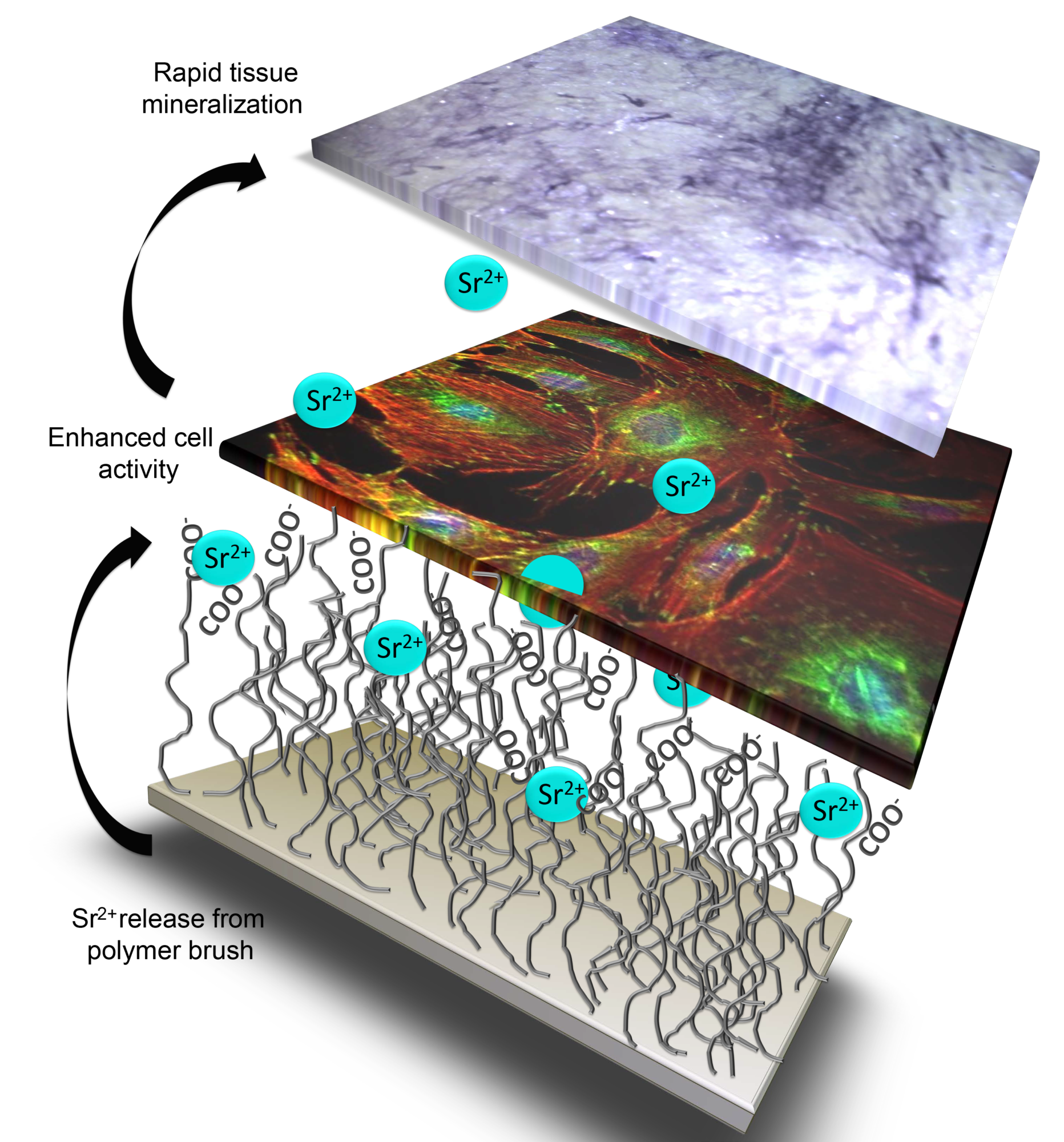
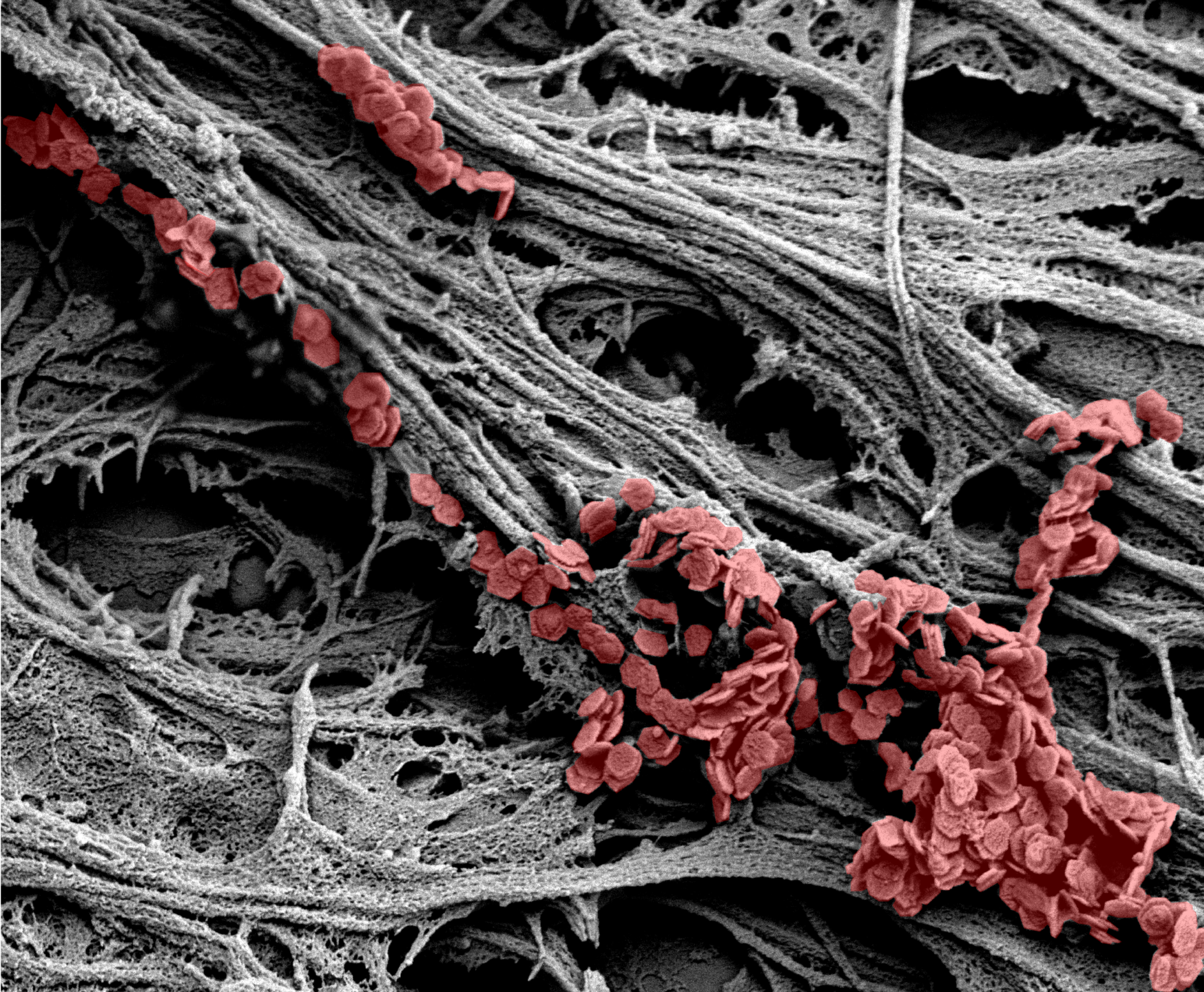
ACS Nano cover, Volume 14, 2020
In 2016 she joined the Prof. Anikeeva Bioelectronics Group at MIT (USA) to follow her fascination for neurobiology. Her work was focused on applying the biomaterials engineering to study and modulate the interactions with nervous system. Her favourite piece of work is development of a magnetomechanical neuromodulation technology that allows for nongenetic control of neuronal signalling in the peripheral nervous system. This technology allows for wireless activation of mechanosensory cells leveraging the force (torque) exerted from the magnetic nanodiscs (MND), specifically targeted to the mechanosensitive ion channels