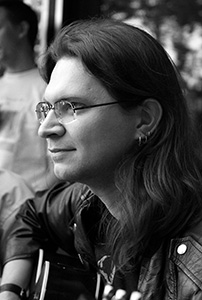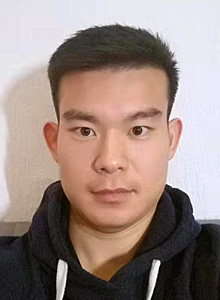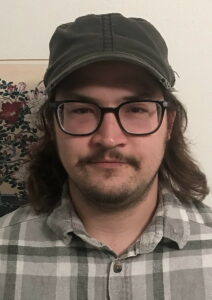
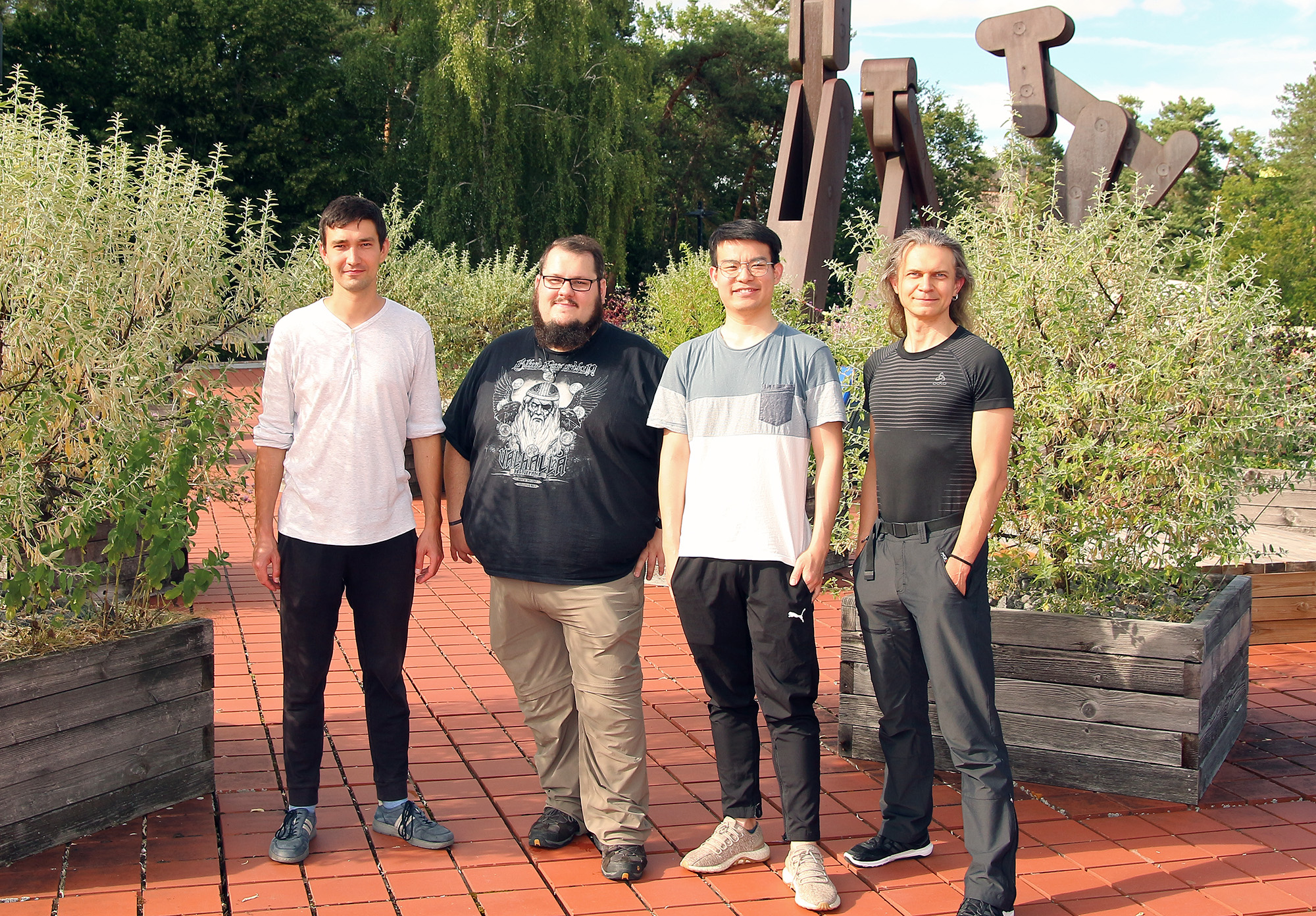
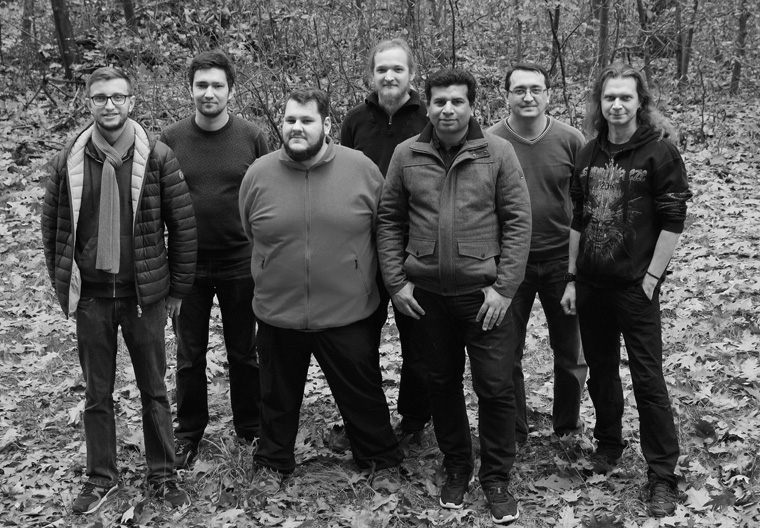
The Department of Molecular and Clinical Pharmacy is run by Professor Susanne Muehlich. The professional and scientific activity of the department is aimed at the characterization of novel drug targets for tumor therapy and the elucidation of the underlying molecular mechanisms of action and optimization of the pharmacotherapy for specific patient groups.
Voringer S, Schreyer L, Nadolni W, Meier MA, Woerther K , Mittermeier C, Ferioli S, Singer S, Holzer K, Zierler S, Chubanov V, Liebl B, Gudermann T and Muehlich S. Inhibition of TRPM7 blocks MRTF/SRF-dependent transcriptional and tumorigenic activity. Oncogene
Romagnani A, Vettore V, Rezzonico-Jost T, Hampe S, Rotolli E, Nadolni W, Perotti M, Meier MA, Hermanns C, Geiger S, Wennemuth G, Recordati C, Matsushita M, Muehlich S, Proietti M, Chubanov V, Gudermann T, Grassi F, Zierler S. TRPM7 kinase activity is essential for T cell colonization and alloreactivity in the gut. Nat. Commun. Dec. 4;8(1):1917. doi: 10.1038/s41467-017-01960-z, 2017.
Hermanns C, Hampl V, Holzer K, Aigner A, Penkava J, Frank N, Martin DE, Maier KC, Waldburger N, Roessler S, Margarete Goppelt-Struebe M, Akrap I, Thavamani A, Singer S, Nordheim A, Gudermann T, Muehlich S. The novel MKL target gene myoferlin modulates expansion and senescence of hepatocellular carcinoma. Oncogene Jan 23; doi: 10.1038/onc.2016.496, 2017.
Muehlich S, Hermanns C, Meier MA, Kircher P, Gudermann T. Unravelling a new mechanism linking actin polymerization and gene transcription. Nucleus 7 (2): 121-5, 2016.
Muehlich S, Rehm M, Ebenau A, Goppelt-Struebe M. Synergistic induction of CTGF by cytochalasin D and TGFβ-1 in primary human renal epithelial cells: Role of transcriptional regulators MKL1, YAP/TAZ and Smad2/3. Cell Signal. Oct 7; 29:31-40, 2016.
Kircher P, Hermanns C, Nossek M, Drexler KM, Chinchilla P, Grosse R, Fischer M, Sarikas A, Penkava J, Lewis T, Prywes R, Gudermann T, Muehlich S. Filamin A interacts with the coactivator MKL1 to promote the activity of the transcription factor SRF and cell migration. Sci Signal Nov 10;8:ra112. doi: 10.1126/scisignal.aad2959, 2015.
Hayashi K, Murai T, Oikawa H, Masuda T, Kimura K, Muehlich S, Prywes R and Morita T. A novel inhibitory mechanism of MRTF-A/B on the ICAM-1 gene expression in vascular endothelial cells. Sci Rep May 29;5:10627, 2015.
Giehl K, Keller C, Muehlich S, Goppelt-Struebe M. Actin-mediated gene expression depends on RhoA and Rac1 signaling in proximal tubular epithelial cells. Plos One Mar 27;10(3):e0121589, 2015.
Breit A, Besik V, Solinski HJ, Muehlich S, Glas E, Yarwood S, Gudermann T. Epidermal growth factor induced serine 727 phosphorylation of hypothalamic STAT-3 enhances thyroliberinand SOCS-3 expression independently from tyrosine 705 phosphorylation. Mol Endocrinol. Mar;29(3):445-59, 2015.
Kraenbring J, Penza TM, Gutmann J, Muehlich S, Zolk O, Wojnowsky L, Maas R, Engelhardt S, Sarikas A. Accuracy and completeness of drug information in Wikipedia: a comparison with standard textbooks of pharmacology. Plos One Sep 24;9(9):e106930, 2014.
Hartmann T, Xu X, Kronast M, Muehlich S, Meyer K, Zimmermann W, Hurwitz J, Pan ZQ, Engelhardt S, Sarikas A. Inhibition of Cullin-RING E3 ubiquitin ligase 7 by simian virus 40 large T antigen. Proc Natl Acad Sci USA Mar 4;111(9):3371-6, 2014.
Scheufele F, Wolf B, Kruse M, Hartmann T, Lempart J, Muehlich S, Pfeiffer AF, Field LJ, Charron MJ, Pan ZQ, Engelhardt S, Sarikas A. Evidence for a regulatory role of Cullin-RING E3 ubiquitin ligase 7 in insulin signaling. Cell Signal. Feb;26(2):233-9, 2014.
Muehlich S, Gudermann T. Pro-senescence therapy for hepatocellular carcinoma. Aging Sep; 5(9) :639-40, 2013.
Hampl V, Martin C, Aigner A, Hoebel S, Singer S, Frank N, Sarikas A, Ebert O, Prywes R, Gudermann T, Muehlich S. Depletion of the transcriptional coactivators Megakaryoblastic Leukemia 1 and 2 abolishes hepatocellular carcinoma xenograft growth by inducing oncogene-induced senescence. EMBO Molecular Medicine Sep;5(9):1367-82, 2013.
Muehlich S, Hampl V, Khalid S, Singer S, Frank N, Breuhahn K, Gudermann T, Prywes R. The transcriptional coactivators megakaryoblastic leukemia 1/2 mediate the effects of loss of the tumor suppressor deleted in liver cancer 1. Oncogene Aug 30;31(35):3913-23, 2012.
Muehlich S, Wang R, Lee SM, Lewis TC, Dai C, Prywes R. Serum-induced phosphorylation of the SRF coactivator MKL1 by the ERK1/2 pathway inhibits its nuclear localization. Mol Cell Biol. Oct; 28 (20):6302-13, 2008.
Cicha I, Goppelt-Struebe M, Muehlich S, Yilmaz A, Raaz D, Daniel WG, Garlichs CD. Pharmacological inhibition of RhoA signaling prevents connective tissue growth factor induction in endothelial cells exposed to non-uniform shear stress. Atherosclerosis Jan; 196(1):136-45, 2008.
Muehlich S, Cicha I, Garlichs CD, Krueger B, Posern G, Goppelt-Struebe M. Actin-dependent regulation of connective tissue growth factor (CTGF). Am J Physiol Cell Physiol. May; 292(5):C1732-8, 2007.
Muehlich S, Schneider N, Hinkmann F, Garlichs CD, Goppelt-Struebe M. Induction of connective tissue growth factor (CTGF) in human endothelial cells by lysophosphatidic acid, sphingosine-1-phosphate, and platelets. Atherosclerosis Aug;175:261-268, 2004
Curriculum Vitae
Prof. Dr. rer. nat. Susanne Mühlich
Wissenschaftliche Tätigkeit
Seit 10/2018 Professorin für Molekulare und Klinische Pharmazie an der Friedrich-Alexander-Universität Erlangen-Nürnberg
2/2010- 10/2018 Akademische Rätin und Gruppenleiterin am Walther-Straub-Institut für Pharmakologie und Toxikologie der Ludwig-Maximilians-Universität München (Vorstand: Prof. Thomas Gudermann)
3/2009-1/2010 Postdoktoranden-Ausbildung mit Prof. Reinhard Fässler am Max-Planck-Institut für Biochemie, Martinsried
2/2006- 2/2009 Postdoktoranden-Ausbildung mit Prof. Ron Prywes an der Columbia Universität New York, USA
2004 Gastwissenschaftler im Labor von Prof. Paul Gleeson an der Universität Melbourne, Australien
2002-05 “Molekulare Mechanismen der Connective Tissue Growth Faktor Induktion durch Veränderungen im Zytoskelett” Friedrich-Alexander-Universität (FAU) Erlangen-Nürnberg unter Betreuung von Prof. Goppelt-Strübe
Ausbildung
2004 Gastwissenschaftler im Labor von Prof. Paul Gleeson an der Universität Melbourne, Australien
2001-02 Pharmaziepraktikum bei der Boehringer Ingelheim in der Abteilung Forschung und Entwicklung, Biberach
1997-01 Studium der Pharmazie an der Universität Erlangen-Nürnberg
Auszeichnungen
2017 Ernannt zum “Full Faculty Member” der Fakultät “F1000”
2016 Wissenschaftspreis der Münchner Universitätsgesellschaft
2008 Ernannt zum “Associate Faculty Member” der Fakultät “F1000” für Biologie (www.f1000.com)
2006-07 Forschungsstipendium der Deutschen Forschungsgemeinschaft
2004-05 Sprecher des Graduiertenkollegs 750: “Vaskuläre Schäden an Herz und Niere” der Deutschen Forschungsgemeinschaft
2002-05 Promotionsstipendium der Deutschen Forschungsgemeinschaft
Mitgliedschaften
seit 2018 Deutsche Pharmazeutische Gesellschaft (DPhG)
seit 2013 Deutsche Gesellschaft für Pharmakologie und Toxikologie (DGPT)
seit 2006 New York Academy of Sciences (NYAS)
seit 2003 Deutsche Gesellschaft für Zellbiologie (DGZ)
seit 2003 Gesellschaft für Biochemie und Molekularbiologie (GBM)