
Computational Molecular and Materials Science (M.Sc.)
From data to discovery — From atoms to algorithms — From molecules to materials.
The Master’s programme in Computational Molecular and Materials Science combines molecular and materials science with cutting-edge modelling, simulation, and data-driven methods. The programme trains students to analyze, predict, and design molecular and material properties using computational methods and machine learning—laying the groundwork for the development of next-generation materials and molecules: from advanced materials and energy applications to pharmaceuticals, biotechnology and nanotechnology.
Scientific discovery is increasingly driven by computation and data. This programme places you at the heart of this transformation.
You will learn how to:
- Translate physical and chemical insight into computational models
- Use simulations to explore molecular and material behavior
- Apply data science and machine learning to accelerate discovery
- Move seamlessly between theory, computation, and application
- Strong focus on modelling, simulation, and machine learning
- Unique integration of chemistry, physics, materials science, and data science
- Research-driven curriculum with hands-on projects
- Individual mentoring to align diverse academic backgrounds
- Excellent preparation for PhD programmes and R&D careers
The programme follows a blended learning concept that combines flexible online teaching with essential on-campus components. A large share of courses—particularly lectures and exercise sessions—can be attended online, enabling students to study independently of location.
Hands-on practical courses and examinations, however, are conducted in person, ensuring close interaction, practical training, and academic integrity.
The curriculum is carefully designed to combine a common foundation with individual specialization.
Foundational alignment (10 ECTS)
Through mandatory mentoring, your academic background is assessed and—if needed—supplemented with targeted foundational courses to ensure a strong and common starting point.
- Theoretical Chemistry
- Statistical Mechanics
- General Chemistry
- Solid State Physics and Surface Chemistry
Core modules (30 ECTS)
You will build a solid foundation in:
- Quantum Chemistry I
- Multi-scale Simulation Methods I
- Programming and Numerical Simulations
- Mathematics of Learning
- Molecular Mechanics and Data Analysis
- Digital Chemistry and Materials Informatics
Practical courses (10 ECTS)
These ensure hands-on experience from the start:
- Practical Materials Simulation
- Computational Chemistry: ab-initio and DFT methods
- Advanced Molecular Mechanics Simulations
Advanced Specialization (20 ECTS)
Choose advanced modules from four focus areas to shape your personal profile:
Advanced Methods
- Mesoscale Simulation Methods for Fluids and Flows
- Particle-based Fluid Dynamics
- Scientific Programming
- Programming Techniques for Supercomputers
Combining Experiment and Theory
These modules explicitly connect computational approaches with experimental research:
- in Spectroscopy
- in Structural Biology
- in Materials Properties
- in Catalysis
Materials Simulation
- Multi-scale Simulation Methods II
- Materials Data Engineering in Industrial Practice
- Classical Machine Learning for Materials
- Materials Modeling and Simulation
Molecular Simulation
- Quantum Chemistry II
- Molecular Modelling and Simulation
- Predictive Modelling: Chemo- and Bioinformatics
You will carry out and independent research project (10 ECTS) in a group of your choice, followed by a Master’s thesis (30 ECTS) with oral presentation. Both can, by agreement, be completed at external universities or in industry, while academic supervision remains with FAU.
A dedicated Master’s seminar (5 ECTS) connects your studies to current research topics and emerging trends in the field.
Students select one elective module (5 ECTS) from the FAU-wide course catalogue, enabilng individual specialization and interdisciplinary perspectives.
The programme is aimed at students with a Bachelor’s degree in natural or engineering sciences who:
- Have a strong interest in computational approaches
- Possess basic knowledge of chemistry, including elementary quantum-mechanical concepts
- Wish to deepen their expertise at the interface of molecular science, materials science, and modern methods in modelling, simulation, and data science.
Typical academic backgrounds include chemistry, molecular science, physics, materials science, mathematics, and related disciplines with an atomic or molecular focus.
Graduates of this programme are highly sought after in:
- Academic research and doctoral programmes
- Materials science, chemistry, and pharmaceutical industries
- Computational research & development
- Data-driven research environments
The programme also provides an excellent foundation for interdisciplinary careers at the interface of science, computation, and data processing.
Research Highlights
Dye-sensitized solar cell
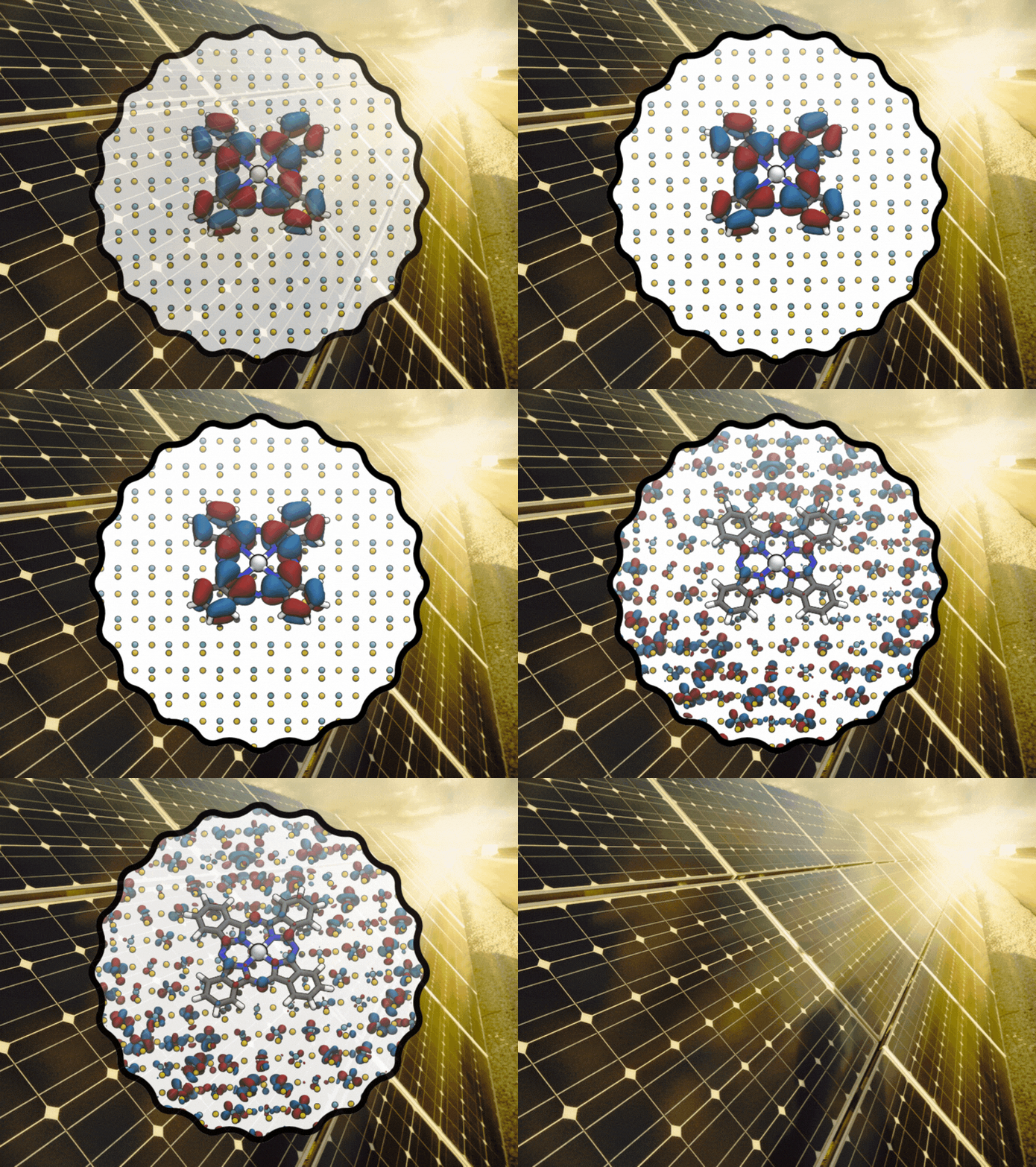
During optical excitation of a dye molecule attached to the surface of a semiconductor, significant charge transfer is imposed to improve electron/hole mobility in the solar cell. The animation highlights the change of electronic wavefunction obtained from quantum calculation of the involved energetic states.
Understanding material failure
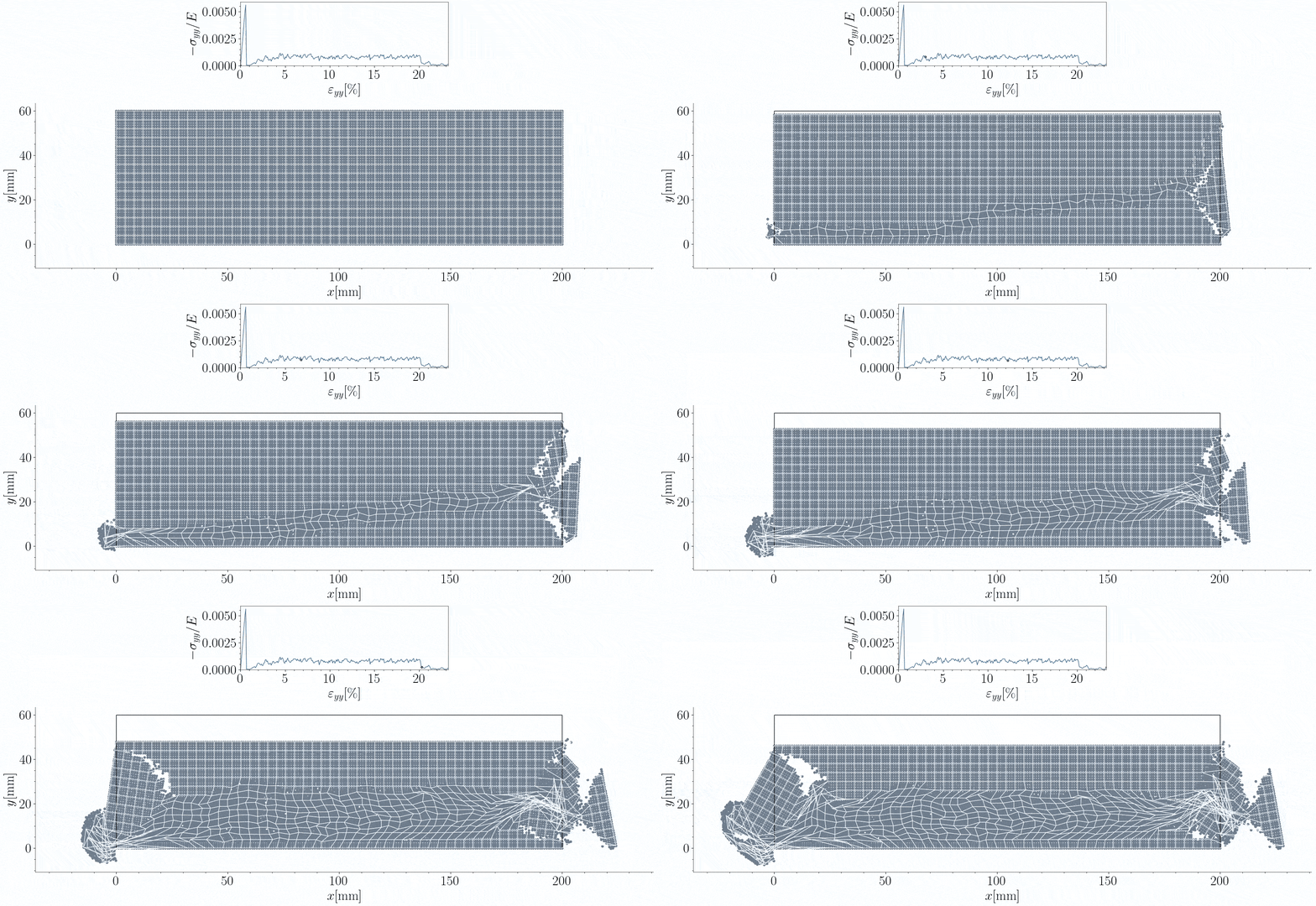
Upon increasing compression, the material evolves from elastic deformation to fatal damage.
While the upper plot illustrates the forces opposing the compression loading in y-direction, the animation below shows the nucleation and propagation of cracks in a 2-D model of a highly porous, brittle material.
Tailor-made nanoparticles for cleaning water
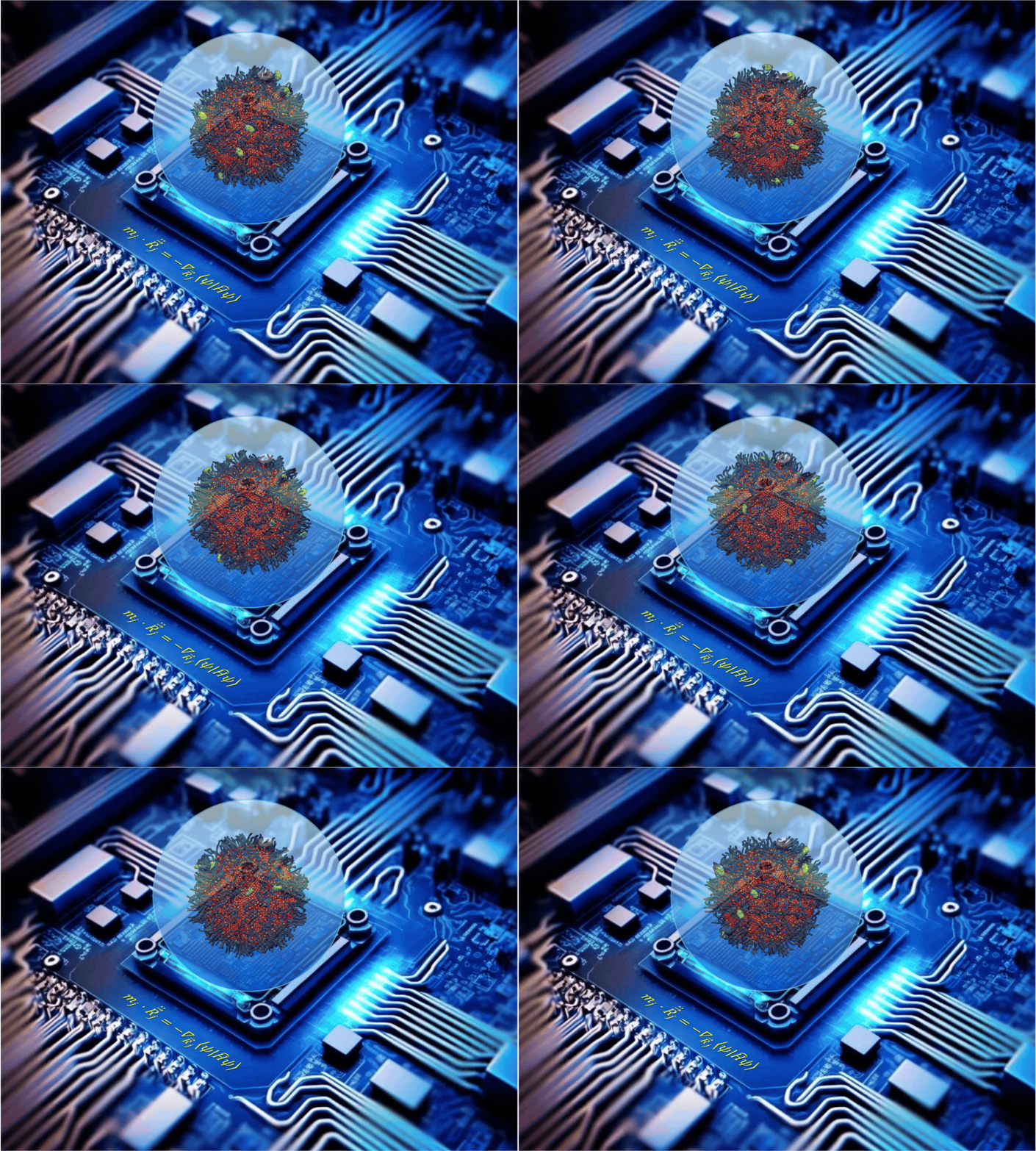
Magnetic nanoparticles are tuned to selectively bind pollutants.
The animation stems from a molecular dynamics simulation of the self-organization process featuring ”molecular recognition“ of the pollutant species (here: estrogen, green color) to be removed from water.
Digital Chemistry

Molecules are explored computationally rather than in the laboratory. The image illustrates different representations of a caffeine molecule—from a 1D SMILES string to 2D and 3D structural models.
Biological systems
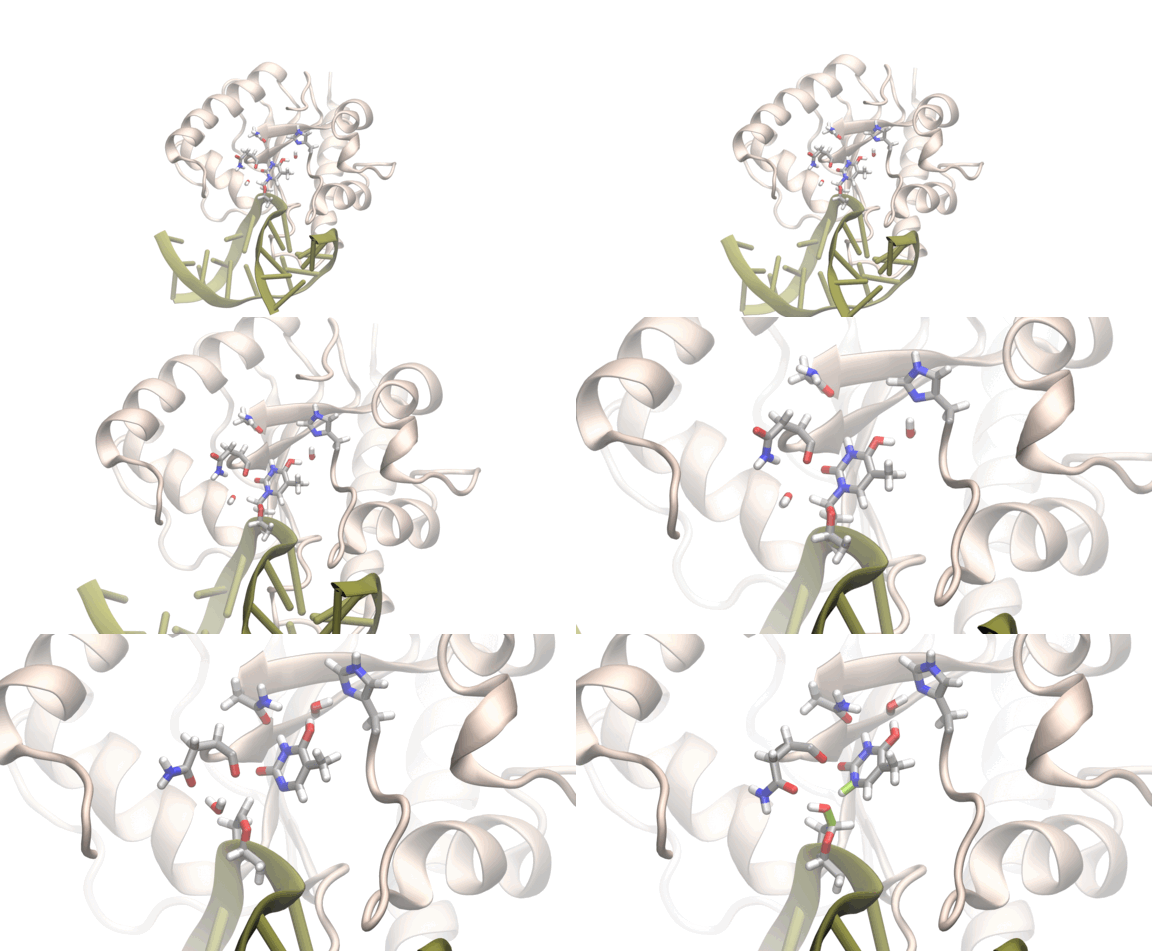
A DNA repair enzyme recognises a wrong or damaged base in the DNA and “cuts” it out such that subsequent enzymes can put in the correct base and repair the DNA. The animation shows the “cut”, i.e. breaking of the bond between sugar and base as computed by a QM/MM simulation of the reaction in the Enzyme-DNA complex.
Novel Catalyst Concepts
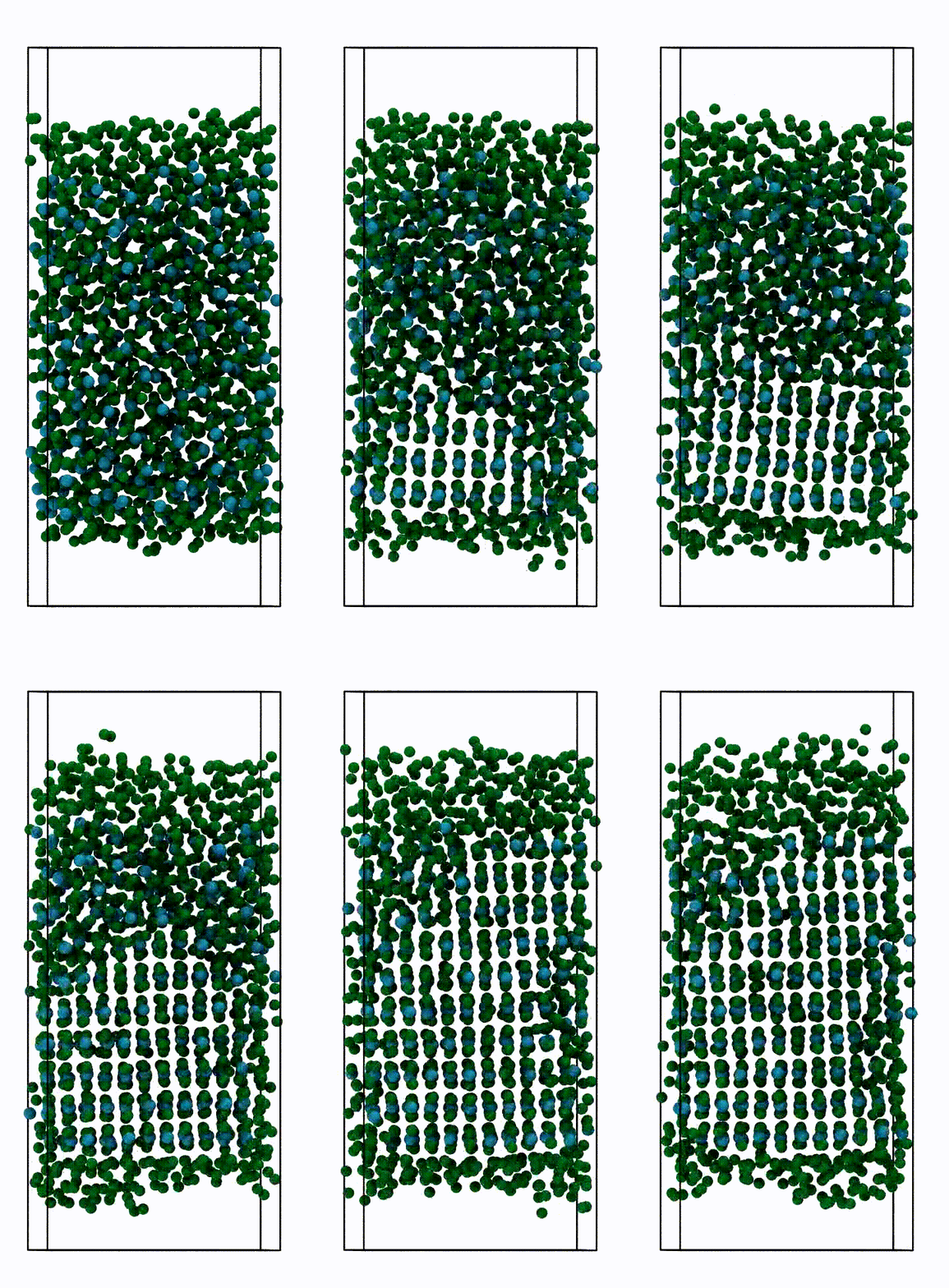
Metal alloys containing gallium with a small addition of active metals like platinum are liquid at temperatures relevant for industrial catalysis and have beneficial properties. The animation shows a machine-learned force field simulation of a gallium-platinum alloy and the real-time formation of a crystalline gallium-platinum intermetallic compound (Ga2Pt), also visible in experimental measurements.
At a glance
| Degree | Master of Science (MSc) |
| Duration | 4 semesters/2 years (full-time) or 8 semesters/4 years (part-time) |
| Credits | 120 ECTS |
| Workload | 100 SWS |
| Programme start | Winter semester |
| Teaching language | English |
Applicants must hold a Bachelor’s degree in a relevant field from a recognized university.
Relevant Academic Background
A Bachelor’s degree in Chemistry, Molecular Science, or Physics is considered directly relevant. Applicants with closely related degrees may also be eligible if their studies included a strong focus on molecular-based natural sciences (approximately 60% of the curriculum), with coursework in:
- Quantum mechanics (minimum 5 ECTS or an equivalent workload)
- Chemistry or Molecular Science (minimum 5 ECTS or an equivalent workload)
- Mathematics / mathematical methods or Physics (minimum 5 ECTS or an equivalent workload)
Applicants from other natural or engineering science backgrounds may be assessed individually, based on their academic profile and study focus.
Students who have not yet completed their Bachelor’s degree must have completed the equivalent of at least 135 ECTS (approximately 75% of a standard Bachelor’s programme) at the time of application.
English Language Requirement
Applicants must provide proof of English language proficiency at CEFR level B2 (or equivalent). This requirement is waived if the previous degree was completed entirely in English.
Selection Procedure
Admission is based on academic performance and subject-specific background. Depending on qualifications and grades, applicants may be invited to an oral interview conducted in English.
The interview assesses:
- Subject-specific knowledge in chemistry, molecular science, mathematics, physics, and quantum mechanics (50%)
- Ability to discuss scientific topics in English (30%)
- Motivation and ability to relate prior studies to the Master’s programme (20%)
The final admission decision is made by the programme’s admissions committee.
Additional Requirements for International Applicants
Applicants whose nationality does not fall under the Lisbon Recognition Convention may be required to meet additional formal criteria.
In particular:
- The Bachelor’s degree must have been obtained from a university listed as H+ in the Anabin database.
- Applicants must submit results from a standardised subject-specific test:
- the GRE (Graduate Record Examination) Subject Test in Physics, with FAU specified as a designated recipient, and a minimum score at the 50th percentile, or
- the GATE test in Chemistry (e.g. for applicants from India), reaching a minimum score of 650.
All applications must be submitted online via CAMPO, FAU’s application portal.
Application deadline: 15 July
Further information on the application process and admission requirements is available here:
Scholarships and Funding
FAU offers a wide range of information on scholarships and funding opportunities for prospective and current students.
Learn more about financing your studies here:
Accommodation
FAU does not allocate student accommodation directly. However, the University works closely with Student Services Erlangen–Nürnberg, which provides guidance and support in the search for housing.
Students are required to take an active role in finding suitable accommodation on the private rental market, which can be competitive.
Further information and practical tips on living in the region can be found here: