
Index
People
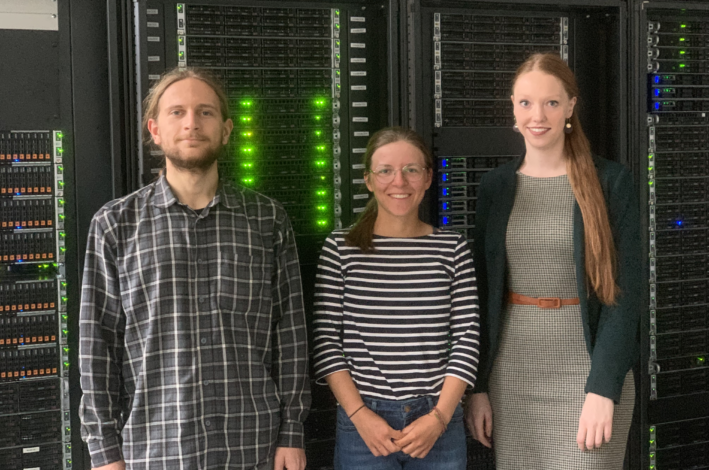
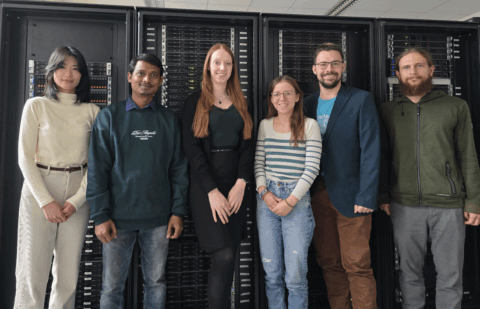
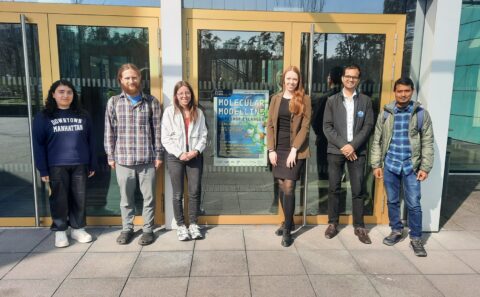
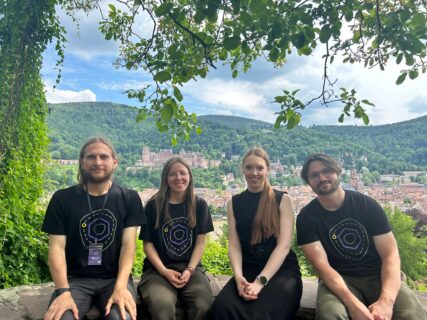
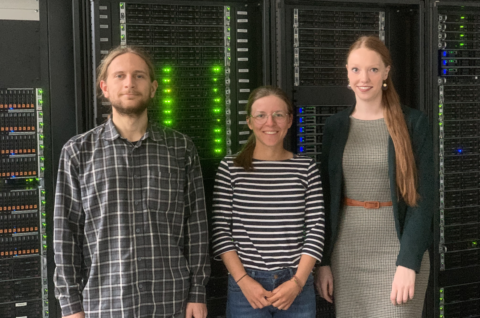
Head of the Group

Carolin Müller, Jun.-Prof.
E-Mail: carolin.cpc.mueller@fau.de
Office: Computer-Chemie-Centrum (CCC), 2.201B



Isabelle Schraufstetter, secretary
E-Mail: ccc@fau.de
Office: Computer-Chemie-Centrum (CCC), 2.111
Phone: 09131-85-20400
Researcher

Debabrata Halder, Postdoctoral Researcher (EAM Starting Grant)
E-Mail: debabrata.halder@fau.de
Office: Computer-Chemie-Centrum (CCC), 2.306

Kevin Höllring, Postdoctoral Researcher (ChemPrint, CRC 1719)
E-Mail: kevin.hoellring@fau.de
Office: Computer-Chemie-Centrum (CCC), 2.306

Theodor Everley Röhrkasten, PhD student
E-Mail: theodor.roehrkasten@fau.de
Office: Computer-Chemie-Centrum (CCC), 2.306

Martina Hartinger, PhD student (FCI Kekulé Fellowship)
E-Mail: martina.hartinger@fau.de
Office: Computer-Chemie-Centrum (CCC), 2.306


Shi Hui Wong, PhD student (ChemPrint, CRC 1719)
E-Mail: shi.wong@fau.de
Office: Computer-Chemie-Centrum (CCC), 2.306


Cansun Saglam, research/conference assistant (CCSC 2026)
E-Mail: cansun.saglam@fau.de
Office: Computer-Chemie-Centrum (CCC), 2.306
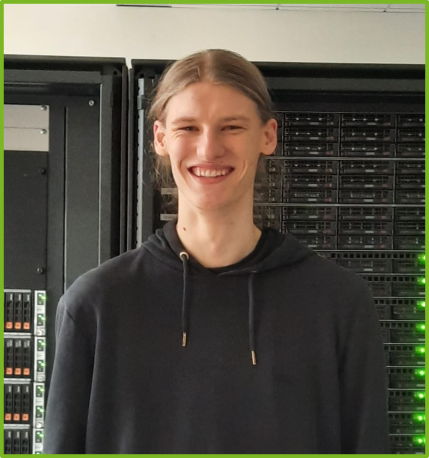
Connor Forster, research assistant
E-Mail: connor.forster@fau.de
Office: Computer-Chemie-Centrum (CCC), 2.306

Tobias Werner, research assistant
E-Mail: tobias.werner@fau.de
Office: Computer-Chemie-Centrum (CCC), 2.306
Undergraduate and Graduate Students

Vipul Kumar Ambasta, master student
E-Mail: vipul.kumar.ambasta@fau.de
Office: Computer-Chemie-Centrum (CCC), 2.306
M. Sc. Advanced Materials and Processes
Fariba Mohammadipour, master student
E-Mail: fariba.mohammadipour@fau.de
Office: Computer-Chemie-Centrum (CCC), 2.306
M. Sc. Artificial Intelligence
Mohammad Saad Khan, master student
E-Mail: mohammad.s.khan@fau.de
Office: Computer-Chemie-Centrum (CCC), 2.306
M. Sc. Artificial Intelligence
Qingwen Pang, master student
E-Mail: qingwen.pang@fau.de
Office: Computer-Chemie-Centrum (CCC), 2.306
M. Sc. Artificial Intelligence
Mohammad Madahian, master student
E-Mail: mohammad.madahian@fau.de
Office: Computer-Chemie-Centrum (CCC), 2.306
M. Sc. Artificial Intelligence
Completed Theses
M. Sc. Chemie / Chemistry
- Shi Hui Wong (‘Rational Design of Perylene-Rhodium Photocatalysts: A Computational Investigation‘)
Completed Theses
B. Sc. Chemie
- Katharina Fuchs (Substituent Effects on the Photoisomerization of Aza-Diarylethenes: A Theoretical Study)
- Connor Forster (Revisiting Woodward-Fieser-Kuhn Rules and Acridine Cyclo-Annulation for efficient Prediction of Absorption Maxima)
- Dario Karlovic (Theoretical Insights into the light-driven intramolecular [3+2] cycloaddition towards Chromenopyrazoles)
- Tobias Werner (Combining Active Learning and Excited State Machine Learning Force Fields for the Optimization of Data Acquisition to Describe Photoisomerization)
Alumni

Nathan Pierrat (master student @ ENS Paris-Saclay)
Julia Ngo (master student @ RWTH Aachen)
Teaching
Sprechstunde/Open Office:
- jeden Dienstag von 16:00 bis 17:00 Uhr / every Tuesday, 4:00 to 5:00 pm
Vorlesungen und Kurse/Lectures and Courses
Aktuell
- Winter Term 2025/26, Lecture: Digital Alchemy (M. Sc. Artificial Intelligence)
- Wintersemester 2025/26, Crash-Kurs: Wissenschaftliche Texte mit LaTeX Schreiben (in der Chemie) (B. Sc. Chemie)
- Summer Term, Lecture: Digital Chemistry (M. Sc. Chemistry, M. Sc. Data Science)
Generelle Informationen
- eine Liste von Lehrveranstaltungen finde Sie auf Campo
- Material zu den Vorlesungen finden Sie auf StudOn und GitHub
Research
CPC GroupIn the Computational PhotoChemistry (CPC) group, we explore the fascinating world of light-induced molecular phenomena. By integrating quantum chemistry, chemoinformatics, and spectroscopic data, we uncover the principles driving photochemical and photophysical processes at the molecular level.

Research Areas

Mechanistic Studies of Photoactive Molecules
Our group investigates the fundamental mechanisms that govern how photoactive molecules convert light into motion, charge, or chemical reactivity. Using excited-state quantum chemical simulations and photodynamics simulations, we uncover how structural features, key geometries (e.g. minima, transition states and conical intersections), and spin states shape photophysical properties and photochemical reactions. These insights guide the rational design of molecular photoswitches and photocatalysts with tailored performance.

Data Infrastructure & Machine Learning for Excited-State Dynamics
We are developing tools to support the lifecycle of excited-state dynamics data, beginning once trajectories are available. We aim to enable exploratory analysis, visualization, and the extraction of mechanistic insights, while standardizing how simulation data are stored and applied in machine learning workflows. By bridging raw trajectory data with AI models and community data standards, we aim to facilitate reproducible, large-scale, and accelerated simulations of photoactive systems, providing researchers with streamlined tools to efficiently turn data into understanding.

Molecular Design and Functional Photoactive Materials
Building on mechanistic and computational insights, we design and predict new classes of functional photoactive molecules. Our work combines quantum chemistry and digital chemistry approaches to discover fluorophores and chromophores with optimized photophysical properties — from always-on fluorescence to digitally predicted absorption properties.
Research Spotlights


Beyond Retinal: Machine Learning Models for Photochemical Control in Rhodopsins
(Third Party Funds Single)Project leader:
Term: 1. June 2026 - 31. May 2030
Funding source: StiftungenRhodopsins are light sensitive proteins that play key roles in vision and other biological processes. Although they share the same light absorbing molecule, their responses vary due to the surrounding protein environment. This project uses machine learning together with simulations and experiments to understand and predict these light driven reactions, with the aim of enabling the design of new light sensitive proteins for applications in biology and medicine.
Excited-state phenomena: Unraveling structure-property relationships across dimensions
(Third Party Funds Group – Sub project)Overall project: SFB 1719: Next-generation printed semiconductors: Atomic-level engineering via molecular surface chemistry
Project leader:
Term: 1. October 2025 - 30. June 2029
Acronym: SFB 1719 M02
Funding source: DFG / Sonderforschungsbereich (SFB)Project M2 is devoted to the development and application of approaches to elucidate and predict excited state phenomena in aggregates of varying numbers of atoms and molecules. This includes studying model systems throughout the molecular precursor-to-material pathway, from individual atoms and molecules to aggregates and extended systems such as two-dimensional (2D) materials on different length-scales (e.g., monolayers or multilayers), assembled molecules (e.g., dimers or monolayers), and molecules adsorbed or covalently bonded on surfaces. The primary focus will be on transition metal dichalcogenides, V-VI chalcogenides, and perovskites for materials, and photoswitches for molecular systems. To address this challenge, we will use a combination of ab initio quantum chemical methods, such as time-dependent density functional theory and many-body perturbation theory, along with data science techniques. This approach will help us to explore structure- and size-dependent properties of excited state phenomena, including electronic absorption and emission spectra and the yield and rate of certain photoinduced processes. The developed procedures will be critically validated through close collaboration with experimental spectroscopic projects, reinforcing our understanding of how certain structures determine the excited state properties of materials.
Navigating the Odyssey of Photochemistry: Charting Efficient Strategies for the Prediction and Optimization of Light-Induced Triplet Energy Transfer Reactions
(Third Party Funds Single)Project leader:
Term: 1. February 2025 - 31. January 2031
Acronym: HRCD 2024
Funding source: Stiftungen
URL: https://hector-fellow-academy.de/spitzenforschung/hector-rcd-awardees/carolin-mueller/PRISM: Photochemical Rules and Insights for Systematic Modeling
(FAU Funds)Project leader:
Term: 1. December 2024 - 31. December 2025
Acronym: EAM-SG24-01Eco-PhotoCompute - Crafting Sustainable Strategies for Computational Photochemistry
(FAU Funds)Project leader:
Term: 15. July 2024 - 15. July 2025
Acronym: ETI-Förderung 2024-2_Nat_09_Mueller
CV Carolin Müller

Carolins academic journey began at Friedrich Schiller University Jena, where she earned her Master of Science degree in chemistry in 2018. From 2018 to 2021, she delved into her doctoral studies at the same university, guided by Benjamin Dietzek-Ivanšić. After completing her doctorate, she spent a year as a postdoctoral researcher with Benjamin Dietzek-Ivanšić. Afterwards she moved to the University of Luxembourg, where she joined the Theoretical Chemical Physics group, led by Alexandre Tkatchenko, as a Feodor Lynen Postdoctoral researcher of the Alexander von Humboldt Foundation in June 2022. In November 2023, she joined the FAU Erlangen-Nürnberg as Assistant Professor for the Theory of Electronically Excited States.
Her research is about exploring the fascinating world of light-induced processes in chemistry, from the lively dance of electrons to the magical transformation of molecules. Her main focus is on generating, analysing, and archiving data related to excited states. To accomplish this, she blends the tools of quantum chemistry, chemoinformatics, and spectroscopy into a dynamic team to unlock the secrets behind these impressive light-driven phenomena.
| since 11/2023 | Juniorprofessor for the Theory of Electronically Excited States, Friedrich-Alexander-University Erlangen-Nuremberg, Germany |
| 06/2022-10/2023 | Feodor Lynen Postdoctoral Researcher, University of Luxembourg, Luxembourg |
| 03/2021-05/2022 | Postdoctoral Researcher, Friedrich Schiller University Jena, Germany |
| 09/2018-02/2021 | Dissertation (Dr. rer. nat), Friedrich Schiller University Jena, Germany Thesis: Towards Operando Spectroscopy of Supramolecular Photocatalysts – A Case Study on Ru-dppz-derived Systems |
| 08/2020 | Research Stay, Lund University, Sweden |
| 10/2016-09/2018 | M. Sc. in Chemistry, Friedrich Schiller University Jena, Germany |
| 02/2018-08/2018 | Research Stay, Dublin City University, Ireland |
| 10/2013-09/2016 | B. Sc. in Chemistry, Friedrich Schiller University Jena, Germany |
| 06/2022 – 10/2023 | Feodor Lynen Research Fellowship, Alexander von Humboldt Foundation |
| 04/2023 | Thuringian Research Award 2023 (Applied Research), Federal State of Thuringia (Thüringer Ministerium für Wirtschaft, Wissenschaft und Digitale Gesellschaft) |
| 09/2022 | Albert-Weller Award, German Chemical Society (GDCh, Division of Photochemistry) and the German Bunsen Society for Physical Chemistry (DBG) |
| 06/2022 | Dissertation Award, Faculty of Chemistry and Earth Sciences, Friedrich Schiller University Jena |
| 05/2019 – 02/2021 | FCI Kekulé PhD fellowship, Fonds der Chemischen Industrie |
-
Beyond Retinal: Machine Learning Models for Photochemical Control in Rhodopsins
(Third Party Funds Single)
Project leader:
Term: 1. June 2026 - 31. May 2030
Funding source: StiftungenRhodopsins are light sensitive proteins that play key roles in vision and other biological processes. Although they share the same light absorbing molecule, their responses vary due to the surrounding protein environment. This project uses machine learning together with simulations and experiments to understand and predict these light driven reactions, with the aim of enabling the design of new light sensitive proteins for applications in biology and medicine.
-
Excited-state phenomena: Unraveling structure-property relationships across dimensions
(Third Party Funds Group – Sub project)
Overall project: SFB 1719: Next-generation printed semiconductors: Atomic-level engineering via molecular surface chemistry
Project leader:
Term: 1. October 2025 - 30. June 2029
Acronym: SFB 1719 M02
Funding source: DFG / Sonderforschungsbereich (SFB)Project M2 is devoted to the development and application of approaches to elucidate and predict excited state phenomena in aggregates of varying numbers of atoms and molecules. This includes studying model systems throughout the molecular precursor-to-material pathway, from individual atoms and molecules to aggregates and extended systems such as two-dimensional (2D) materials on different length-scales (e.g., monolayers or multilayers), assembled molecules (e.g., dimers or monolayers), and molecules adsorbed or covalently bonded on surfaces. The primary focus will be on transition metal dichalcogenides, V-VI chalcogenides, and perovskites for materials, and photoswitches for molecular systems. To address this challenge, we will use a combination of ab initio quantum chemical methods, such as time-dependent density functional theory and many-body perturbation theory, along with data science techniques. This approach will help us to explore structure- and size-dependent properties of excited state phenomena, including electronic absorption and emission spectra and the yield and rate of certain photoinduced processes. The developed procedures will be critically validated through close collaboration with experimental spectroscopic projects, reinforcing our understanding of how certain structures determine the excited state properties of materials.
-
Navigating the Odyssey of Photochemistry: Charting Efficient Strategies for the Prediction and Optimization of Light-Induced Triplet Energy Transfer Reactions
(Third Party Funds Single)
Project leader:
Term: 1. February 2025 - 31. January 2031
Acronym: HRCD 2024
Funding source: Stiftungen
URL: https://hector-fellow-academy.de/spitzenforschung/hector-rcd-awardees/carolin-mueller/ -
PRISM: Photochemical Rules and Insights for Systematic Modeling
(FAU Funds)
Project leader:
Term: 1. December 2024 - 31. December 2025
Acronym: EAM-SG24-01 -
Eco-PhotoCompute - Crafting Sustainable Strategies for Computational Photochemistry
(FAU Funds)
Project leader:
Term: 15. July 2024 - 15. July 2025
Acronym: ETI-Förderung 2024-2_Nat_09_Mueller
| since 2023 | TeX User Group (TUG) |
| since 2022 | German Bunsen Society for Physical Chemistry e.V. (DBG) and Young Physical Chemists (yPC) of the DBG |
| since 2013 | Gesellschaft Deutscher Chemiker (GDCh) |
Publications
Research Spotlights
List of Publications
2026
- , :
From handbooks to high-throughput: rule-based prediction of electronic absorption maxima from SMILES with ChromoPredict
In: Digital Discovery 5 (2026), p. 98-107
ISSN: 2635-098X
DOI: 10.1039/d5dd00382b - , , :
Machine learning electronic structure methods
In: Handbook of Electronic Structure Theory, 2026, p. 289-327 (Methods and Applications)
ISBN: 9780443265969
DOI: 10.1016/B978-0-443-26596-9.00009-0
2025
- , , , , , , , , :
Aus der Forschung
In: Nachrichten aus der Chemie 73 (2025), p. 48-51
ISSN: 1439-9598
DOI: 10.1002/nadc.20254154495 - , , , :
Surface Hopping Nested Instances Training Set for Excited-state Learning
In: Scientific Data (2025)
ISSN: 2052-4463
DOI: 10.1038/s41597-025-05443-5 - , :
From Handbooks to High-Throughput: Rule-Based Prediction of Electronic Absorption Maxima from SMILES with ChromoPredict
In: Digital Discovery (2025)
ISSN: 2635-098X
DOI: 10.1039/D5DD00382B - , , , :
Assessing the Dynamics of Hemithioindigo-Based Photoswitches Using Multistate Molecular Mechanics
In: Journal of Physical Chemistry A (2025), Article No.: acs.jpca.5c04082
ISSN: 1520-5215
DOI: 10.1021/acs.jpca.5c04082 - , , , , , , :
From Triplet to Twist: The Photochemical E/Z‐Isomerization Pathway of the Near‐Infrared Photoswitch peri‐Anthracenethioindigo
In: Angewandte Chemie International Edition (2025), Article No.: e202510626
ISSN: 1433-7851
DOI: 10.1002/anie.202510626 - , , , :
Noncovalent Interactions in Density Functional Theory: All the Charge Density We Do Not See
In: Journal of the American Chemical Society (2025), Article No.: jacs.5c13706
ISSN: 0002-7863
DOI: 10.1021/jacs.5c13706 - , , , , , , , , , , , , , , , , , , , , , , , , , , , , , :
Solution ALD of (CH3NH3)(PbI3) Perovskite Thin Films Yields Functional Quality and Stability Superior to Classical Processing
In: Angewandte Chemie International Edition (2025), Article No.: e13903
ISSN: 1433-7851
DOI: 10.1002/anie.202513903 - , , , , , , , , , :
Machine Learning for Nonadiabatic Molecular Dynamics: Best Practices and Recent Progress
In: Chemical Science (2025)
ISSN: 2041-6520
DOI: 10.1039/D5SC05579B - , , , , , , , , , , , , , , , , , , , , , , , , , :
Crash testing machine learning force fields for molecules, materials, and interfaces: model analysis in the TEA Challenge 2023
In: Chemical Science (2025)
ISSN: 2041-6520
DOI: 10.1039/D4SC06529H - , , , , , , , , , , , , , , , , , , , , , , , , , :
Crash testing machine learning force fields for molecules, materials, and interfaces: molecular dynamics in the TEA challenge 2023
In: Chemical Science (2025)
ISSN: 2041-6520
DOI: 10.1039/D4SC06530A - , , , , , , , :
Hexabenzocoronene–Benzimidazole Hybrid Architectures and Faraday Rotation of the First Hexabenzocoronene–Phthalocyanine
In: Angewandte Chemie International Edition (2025), Article No.: e22494
ISSN: 1433-7851
DOI: 10.1002/anie.202522494 - , , , , , , , , :
Green-synthesized single-benzene fluorophores exhibiting room-temperature phosphorescence and solid-state fluorescence for biological and optical applications
In: Journal of Materials Chemistry C (2025)
ISSN: 2050-7526
DOI: 10.1039/D5TC03134F
2024
- , , , , , , , :
Steering Photoinduced Electron Transfer in Intramolecular Photocatalysts by Peripheral Ligand Control
In: ChemistryEurope (2024)
ISSN: 2751-4765
DOI: 10.1002/ceur.202300084 - , , , , , , , :
EDITORIAL: Chemical Compound Space Exploration by Multiscale High-Throughput Screening and Machine Learning
In: Journal of Chemical Information and Modeling 64 (2024), p. 5737-5738
ISSN: 1549-9596
DOI: 10.1021/acs.jcim.4c01300 - , , , , , :
SpaiNN: equivariant message passing for excited-state nonadiabatic molecular dynamics
In: Chemical Science 15 (2024), p. 15880-15890
ISSN: 2041-6520
DOI: 10.1039/d4sc04164j
2023
- , , , :
Data-driven tailoring of molecular dipole polarizability and frontier orbital energies in chemical compound space
In: Physical Chemistry Chemical Physics 25 (2023), p. 22211-22222
ISSN: 1463-9076
DOI: 10.1039/d3cp02256k - :
Illuminating Photodynamics with Machine Learning Techniques
In: Deutsche Bunsen-Gesellschaft für physikalische Chemie e.V. (ed.): Bunsen-Magazin 2023, 2023, p. 191-193 (Bunsen-Magazin 2023, Vol.Bunsen-Magazin 2023)
DOI: 10.26125/0ehr-vk47
URL: https://bunsen.de/bmo/illuminating-photodynamics-with-machine-learning-techniques#c1529
(Zeitungsartikel) - , , , , , :
New Twist on the Light-Switch Effect: Controlling the Fate of Excited States with pH in a 4-Hydroxy-thiazol-extended Ruthenium(II) Dppz Complex
In: Journal of Physical Chemistry A (2023)
ISSN: 1520-5215
DOI: 10.1021/acs.jpca.3c06179
2022
- , , , , , , , , , , , :
Pyrimidoquinazolinophenanthroline Opens Next Chapter in Design of Bridging Ligands for Artificial Photosynthesis**
In: Chemistry - A European Journal (2022)
ISSN: 0947-6539
DOI: 10.1002/chem.202200766 - , , , , , , :
Photocatalytic Reduction of Nicotinamide Co-factor by Perylene Sensitized RhIII Complexes**
In: Chemistry - A European Journal 28 (2022), Article No.: e202201931
ISSN: 0947-6539
DOI: 10.1002/chem.202201931 - , , , :
Photoinduced electron transfer in triazole-bridged donor-acceptor dyads – A critical perspective
In: Coordination Chemistry Reviews 472 (2022), Article No.: 214764
ISSN: 0010-8545
DOI: 10.1016/j.ccr.2022.214764 - , , , , :
KiMoPack: A python Package for Kinetic Modeling of the Chemical Mechanism
In: Journal of Physical Chemistry A 126 (2022), p. 4087-4099
ISSN: 1520-5215
DOI: 10.1021/acs.jpca.2c00907 - , , , , , :
A Combined Spectroscopic and Theoretical Study on a Ruthenium Complex Featuring a π-Extended dppz Ligand for Light-Driven Accumulation of Multiple Reducing Equivalents
In: Chemistry - A European Journal 28 (2022), Article No.: e202103882
ISSN: 0947-6539
DOI: 10.1002/chem.202103882 - , , , , , :
Link to glow - iEDDA conjugation of a Ruthenium(II) tetrazine complex leading to dihydropyrazine and pyrazine complexes with improved 1O2 formation ability
In: Journal of Photochemistry and Photobiology 11 (2022), Article No.: 100130
ISSN: 2666-4690
DOI: 10.1016/j.jpap.2022.100130 - , , , , , , , , , , , , , , , , , , :
Active repair of a dinuclear photocatalyst for visible-light-driven hydrogen production
In: Nature Chemistry 14 (2022), p. 500-506
ISSN: 1755-4330
DOI: 10.1038/s41557-021-00860-6 - , , , , , :
Influence of the Linker Chemistry on the Photoinduced Charge-Transfer Dynamics of Hetero-dinuclear Photocatalysts
In: Chemistry - A European Journal 28 (2022), Article No.: e202200490
ISSN: 0947-6539
DOI: 10.1002/chem.202200490 - , , , , , , :
Outpacing conventional nicotinamide hydrogenation catalysis by a strongly communicating heterodinuclear photocatalyst
In: Nature Communications 13 (2022), Article No.: 2538
ISSN: 2041-1723
DOI: 10.1038/s41467-022-30147-4
2021
- , , , , , , , , , , , , , , :
Hydrogen Production at a NiO Photocathode Based on a Ruthenium Dye-Cobalt Diimine Dioxime Catalyst Assembly: Insights from Advanced Spectroscopy and Post-operando Characterization
In: ACS Applied Materials and Interfaces 13 (2021), p. 49802-49815
ISSN: 1944-8244
DOI: 10.1021/acsami.1c12138 - , , , , , :
Kinetic-Model-Free Analysis of Transient Absorption Spectra Enabled by 2D Correlation Analysis
In: Journal of Physical Chemistry Letters 12 (2021), p. 4148-4153
ISSN: 1948-7185
DOI: 10.1021/acs.jpclett.1c00835 - , , , , , :
Photophysics of Ruthenium(II) Complexes with Thiazole π-Extended Dipyridophenazine Ligands
In: Inorganic Chemistry 60 (2021), p. 760-773
ISSN: 0020-1669
DOI: 10.1021/acs.inorgchem.0c02765 - , , , , , , , , , :
Multifunctional Polyoxometalate Platforms for Supramolecular Light-Driven Hydrogen Evolution**
In: Chemistry - A European Journal 27 (2021), p. 16846-16852
ISSN: 0947-6539
DOI: 10.1002/chem.202103817 - , , , , , , :
Konferenzen und Corona - Routineaufgaben, digitale Kaffeepausen, Chatdiskussionen
In: Nachrichten aus der Chemie 69 (2021), p. 8-11
ISSN: 1439-9598
DOI: 10.1002/nadc.20214106721 - , , , , :
The electron that breaks the catalyst's back - excited state dynamics in intermediates of molecular photocatalysts
In: Physical Chemistry Chemical Physics 23 (2021), p. 27397-27403
ISSN: 1463-9076
DOI: 10.1039/d1cp04498b - , , , :
Influence of the Protonation State on the Excited-State Dynamics of Ruthenium(II) Complexes with Imidazole π-Extended Dipyridophenazine Ligands
In: Journal of Physical Chemistry A 125 (2021), p. 5911-5921
ISSN: 1520-5215
DOI: 10.1021/acs.jpca.1c03856 - , , , , , , , , , , , :
Modulating the Excited-State Decay Pathways of Cu(I) 4 H-Imidazolate Complexes by Excitation Wavelength and Ligand Backbone
In: Journal of Physical Chemistry B 125 (2021), p. 11498-11511
ISSN: 1520-6106
DOI: 10.1021/acs.jpcb.1c06902
2020
- , , , , , :
Molecular scylla and charybdis: Maneuvering between pH sensitivity and excited-state localization in ruthenium Bi(benz)imidazole complexes
In: Inorganic Chemistry 59 (2020), p. 12097-12110
ISSN: 0020-1669
DOI: 10.1021/acs.inorgchem.0c01022 - , , , , , , :
Role of MLCT States in the Franck-Condon Region of Neutral, Heteroleptic Cu(I)-4 H-imidazolate Complexes: A Spectroscopic and Theoretical Study
In: Journal of Physical Chemistry A 124 (2020), p. 6607-6616
ISSN: 1520-5215
DOI: 10.1021/acs.jpca.0c04351 - , , , , :
Structure of Diethyl-Phosphonic Acid Anchoring Group Affects the Charge-Separated State on an Iridium(III) Complex Functionalized NiO Surface
In: Chemphotochem 4 (2020), p. 618-629
ISSN: 2367-0932
DOI: 10.1002/cptc.202000038
2019
- , , , , , , , , , , , , , , , , , , , , :
Imaging the Renner–Teller effect using laser-induced electron diffraction
In: Proceedings of the National Academy of Sciences of the United States of America 116 (2019), p. 8173-8177
ISSN: 0027-8424
DOI: 10.1073/pnas.1817465116 - , , , , :
Dimethylaniline functionalised pyrene fluorophores; Dual colour pH switching in solution and self-Assembled monolayers
In: Physical Chemistry Chemical Physics 21 (2019), p. 22440-22448
ISSN: 1463-9076
DOI: 10.1039/c9cp04948g
2017
- , , , , , , , , , , :
[FeFe]-Hydrogenase H-cluster mimics mediated by naphthalene monoimide derivatives of peri-substituted dichalcogenides
In: Dalton Transactions 46 (2017), p. 11180-11191
ISSN: 1477-9226
DOI: 10.1039/c7dt02079a - , , , , , :
Excited State Properties of Heteroleptic Cu(I) 4H-Imidazolate Complexes
In: Inorganic Chemistry 56 (2017), p. 12978-12986
ISSN: 0020-1669
DOI: 10.1021/acs.inorgchem.7b01680
Recent Highlights

SHNITSEL-tools
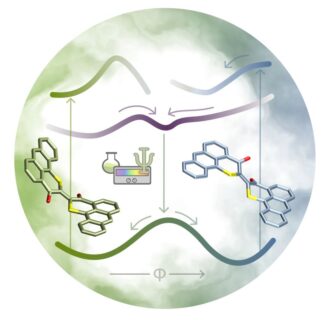
We’ve developed shnitsel-tools: a powerful, user-friendly package for analyzing trajectory surface hopping simulations. No more tedious scripting or fragmented analysis!
With shnitsel-tools, you can automate filtering, visualize dynamics, and uncover excited-state mechanisms across multiple molecules.

ChromoPredict
What happens when the wisdom of mid-20th-century chemists meets today’s digital tools?
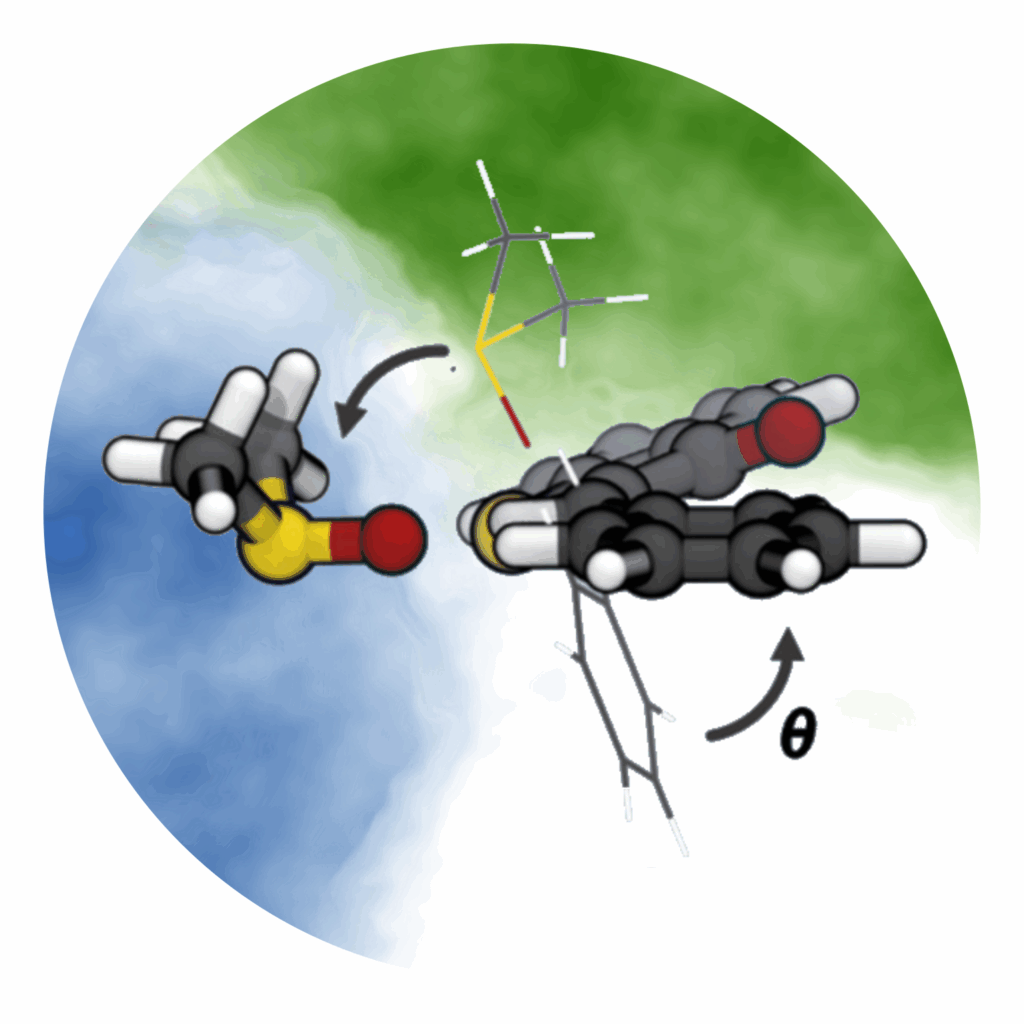
Multistate Modeling of Hemithioindigo Isomerization
We present a multistate molecular mechanics model that captures both the ground (S0) and triplet excited (T1) states of hemithioindigo-based photoswitches — enabling nanosecond-scale molecular dynamics with near quantum mechanical accuracy.
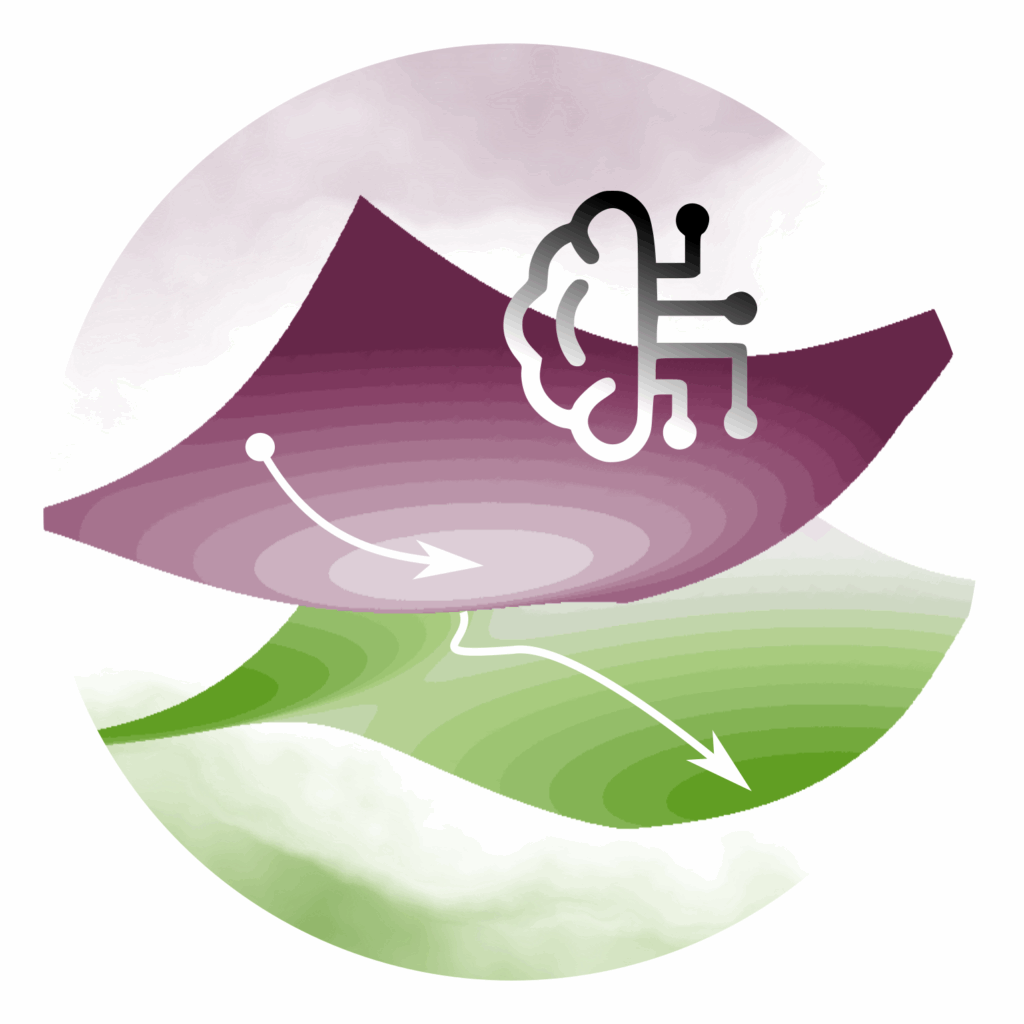
Machine Learning for Non-adiabatic Molecular Dynamics
Curious about how machine learning is transforming excited-state molecular dynamics?
Our latest overview dives into best practices for applying machine learning in non-adiabatic dynamics simulations, from data pre-processing and surface fitting to post-simulation analysis. Learn how machine learning approaches can help overcome computational bottlenecks and uncover patterns in complex photochemical systems — paving the way for data-driven design of photochemistry and -physics.
SHNITSEL-data
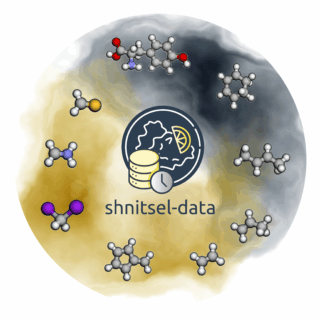
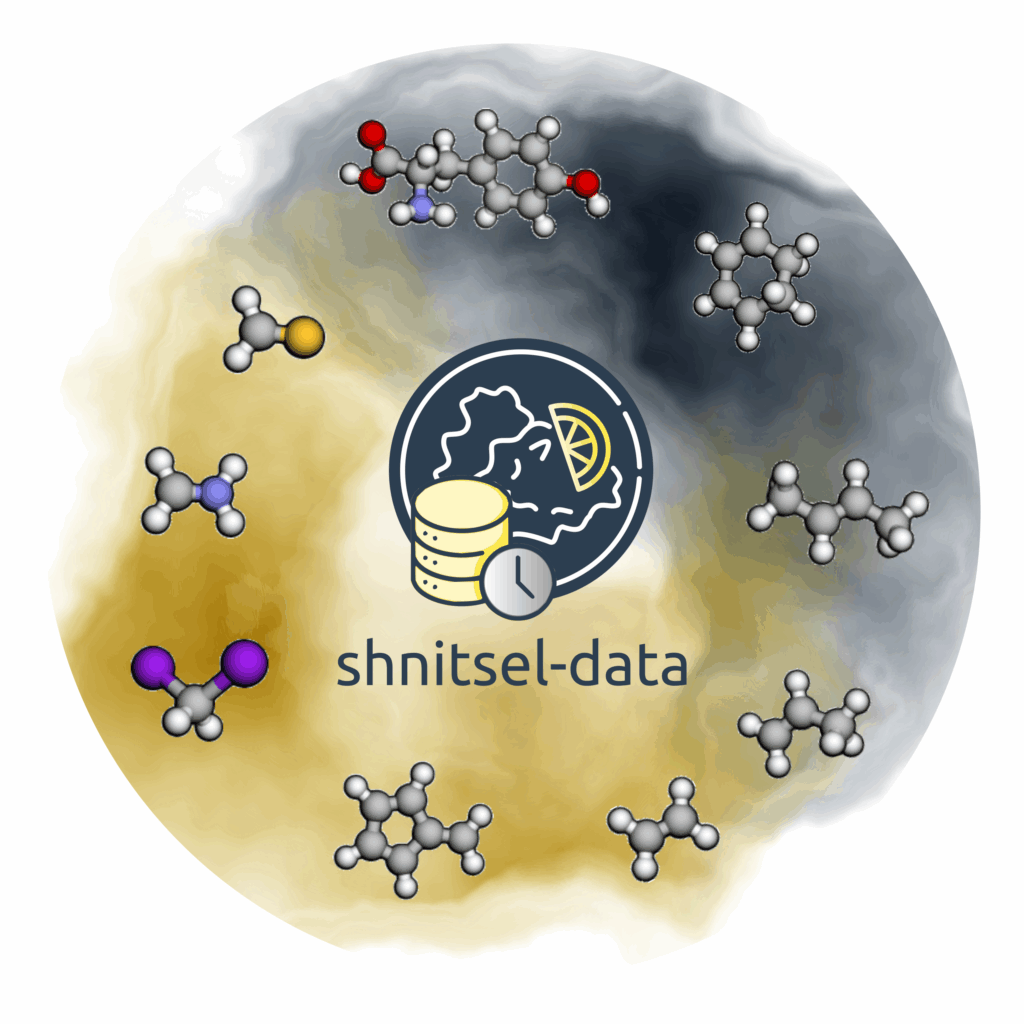
SHNITSEL-data (Surface Hopping Nested Instances Training Set for Excited-state Learning) is an open-access dataset containing 418,870 high-accuracy ab initio data points for nine organic molecules. It includes quantum chemical properties in ground and electronically excited singlet and triplet states, such as energies, forces, dipole moments, nonadiabatic couplings, transition dipoles, and spin-orbit couplings. Generated with state-of-the-art methods, SHNITSEL-data supports the development of machine learning models for excited-state processes in photochemistry and photophysics.
From Triplet to Twist
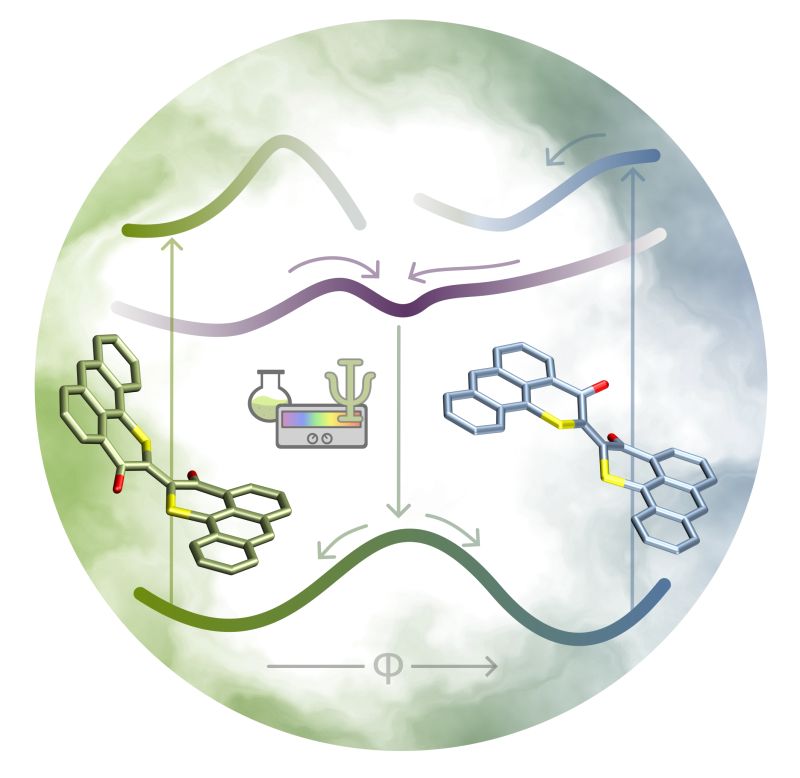
How does Near-Infrared-Photoswitching work? Our newest research delivers an ultrafast molecular movie of the all-red-light photoswitch peri-Anthracenethioindigo (PAT) in action! Guided by excited-state simulations, its mechanism of motion is fully revealed. We show that PAT double bond rotation occurs exclusively from the triplet state – but it is stable in air due to very favorable energy levels.
List of publications can also be found here:
Teaching
Sprechstunde/Open Office:
- jeden Dienstag von 16:00 bis 17:00 Uhr / every Tuesday, 4:00 to 5:00 pm
Vorlesungen und Kurse/Lectures and Courses
Aktuell
- Winter Term 2025/26, Lecture: Digital Alchemy (M. Sc. Artificial Intelligence)
- Wintersemester 2025/26, Crash-Kurs: Wissenschaftliche Texte mit LaTeX Schreiben (in der Chemie) (B. Sc. Chemie)
- Summer Term, Lecture: Digital Chemistry (M. Sc. Chemistry, M. Sc. Data Science)
Generelle Informationen
- eine Liste von Lehrveranstaltungen finde Sie auf Campo
- Material zu den Vorlesungen finden Sie auf StudOn und GitHub
About Carolin Müller
Carolins academic journey began at Friedrich Schiller University Jena, where she earned her Master of Science degree in chemistry in 2018. From 2018 to 2021, she delved into her doctoral studies at the same university, guided by Benjamin Dietzek-Ivanšić. After completing her doctorate, she spent a year as a postdoctoral researcher with Benjamin Dietzek-Ivanšić. Afterwards she moved to the University of Luxembourg, where she joined the Theoretical Chemical Physics group, led by Alexandre Tkatchenko, as a Feodor Lynen Postdoctoral researcher of the Alexander von Humboldt Foundation in June 2022. In November 2023, she joined the FAU Erlangen-Nürnberg as Assistant Professor for the Theory of Electronically Excited States.
Her research is about exploring the fascinating world of light-induced processes in chemistry, from the lively dance of electrons to the magical transformation of molecules. Her main focus is on generating, analysing, and archiving data related to excited states. To accomplish this, she blends the tools of quantum chemistry, chemoinformatics, and spectroscopy into a dynamic team to unlock the secrets behind these impressive light-driven phenomena.
| since 11/2023 | Juniorprofessor for the Theory of Electronically Excited States, Friedrich-Alexander-University Erlangen-Nuremberg, Germany |
| 06/2022-10/2023 | Feodor Lynen Postdoctoral Researcher, University of Luxembourg, Luxembourg |
| 03/2021-05/2022 | Postdoctoral Researcher, Friedrich Schiller University Jena, Germany |
| 09/2018-02/2021 | Dissertation (Dr. rer. nat), Friedrich Schiller University Jena, Germany Thesis: Towards Operando Spectroscopy of Supramolecular Photocatalysts – A Case Study on Ru-dppz-derived Systems |
| 08/2020 | Research Stay, Lund University, Sweden |
| 10/2016-09/2018 | M. Sc. in Chemistry, Friedrich Schiller University Jena, Germany |
| 02/2018-08/2018 | Research Stay, Dublin City University, Ireland |
| 10/2013-09/2016 | B. Sc. in Chemistry, Friedrich Schiller University Jena, Germany |
| 06/2022 – 10/2023 | Feodor Lynen Research Fellowship, Alexander von Humboldt Foundation |
| 04/2023 | Thuringian Research Award 2023 (Applied Research), Federal State of Thuringia (Thüringer Ministerium für Wirtschaft, Wissenschaft und Digitale Gesellschaft) |
| 09/2022 | Albert-Weller Award, German Chemical Society (GDCh, Division of Photochemistry) and the German Bunsen Society for Physical Chemistry (DBG) |
| 06/2022 | Dissertation Award, Faculty of Chemistry and Earth Sciences, Friedrich Schiller University Jena |
| 05/2019 – 02/2021 | FCI Kekulé PhD fellowship, Fonds der Chemischen Industrie |
-
Beyond Retinal: Machine Learning Models for Photochemical Control in Rhodopsins
(Third Party Funds Single)
Project leader:
Term: 1. June 2026 - 31. May 2030
Funding source: StiftungenRhodopsins are light sensitive proteins that play key roles in vision and other biological processes. Although they share the same light absorbing molecule, their responses vary due to the surrounding protein environment. This project uses machine learning together with simulations and experiments to understand and predict these light driven reactions, with the aim of enabling the design of new light sensitive proteins for applications in biology and medicine.
-
Excited-state phenomena: Unraveling structure-property relationships across dimensions
(Third Party Funds Group – Sub project)
Overall project: SFB 1719: Next-generation printed semiconductors: Atomic-level engineering via molecular surface chemistry
Project leader:
Term: 1. October 2025 - 30. June 2029
Acronym: SFB 1719 M02
Funding source: DFG / Sonderforschungsbereich (SFB)Project M2 is devoted to the development and application of approaches to elucidate and predict excited state phenomena in aggregates of varying numbers of atoms and molecules. This includes studying model systems throughout the molecular precursor-to-material pathway, from individual atoms and molecules to aggregates and extended systems such as two-dimensional (2D) materials on different length-scales (e.g., monolayers or multilayers), assembled molecules (e.g., dimers or monolayers), and molecules adsorbed or covalently bonded on surfaces. The primary focus will be on transition metal dichalcogenides, V-VI chalcogenides, and perovskites for materials, and photoswitches for molecular systems. To address this challenge, we will use a combination of ab initio quantum chemical methods, such as time-dependent density functional theory and many-body perturbation theory, along with data science techniques. This approach will help us to explore structure- and size-dependent properties of excited state phenomena, including electronic absorption and emission spectra and the yield and rate of certain photoinduced processes. The developed procedures will be critically validated through close collaboration with experimental spectroscopic projects, reinforcing our understanding of how certain structures determine the excited state properties of materials.
-
Navigating the Odyssey of Photochemistry: Charting Efficient Strategies for the Prediction and Optimization of Light-Induced Triplet Energy Transfer Reactions
(Third Party Funds Single)
Project leader:
Term: 1. February 2025 - 31. January 2031
Acronym: HRCD 2024
Funding source: Stiftungen
URL: https://hector-fellow-academy.de/spitzenforschung/hector-rcd-awardees/carolin-mueller/ -
PRISM: Photochemical Rules and Insights for Systematic Modeling
(FAU Funds)
Project leader:
Term: 1. December 2024 - 31. December 2025
Acronym: EAM-SG24-01 -
Eco-PhotoCompute - Crafting Sustainable Strategies for Computational Photochemistry
(FAU Funds)
Project leader:
Term: 15. July 2024 - 15. July 2025
Acronym: ETI-Förderung 2024-2_Nat_09_Mueller
| since 2023 | TeX User Group (TUG) |
| since 2022 | German Bunsen Society for Physical Chemistry e.V. (DBG) and Young Physical Chemists (yPC) of the DBG |
| since 2013 | Gesellschaft Deutscher Chemiker (GDCh) |
Prof. Dr. Carolin Müller
Prof. Dr. Carolin Müller

Department of Chemistry and Pharmacy
Juniorprofessur für die Theorie elektronisch angeregter Zustände
Nägelsbachstr. 25
91052 Erlangen
- Phone number: 091318520406
- Fax number: 091318520404
- Email: carolin.cpc.mueller@fau.de
- Website: https://www.chemistry.nat.fau.eu/mueller-group
Section
Theoretical and Computer Chemistry
Research areas
Molecular materials:
Energy
Molecular and material modeling for solar energy conversion
Modeling excited-state processes and reactions triggered by light absorption or energy transfer
Molecular materials:
Sustainability
Efficient workflows for predicting photoinduced processes and reactions
Bioactive Compounds:
Compound discovery
Creation of computational chemistry databases
Machine learning for molecular and material design
Member of:
Research Focus
The research in Prof. Carolin Müller’s Computational PhotoChemistry Group focuses on the fascinating field of light-induced physical processes and chemical reactions, ranging from electron transfer processes to isomerization. By using advanced computational methods, the mechanisms behind photoinduced phenomena are revealed. A central focus is on the control and optimization of light-driven processes to achieve increased reactivity and efficiency. This research direction is interdisciplinary in nature and not only combines approaches from quantum chemistry and chemoinformatics, but also works closely with experimental, spectroscopic research groups.
-
Beyond Retinal: Machine Learning Models for Photochemical Control in Rhodopsins
(Third Party Funds Single)
Project leader:
Term: 1. June 2026 - 31. May 2030
Funding source: StiftungenRhodopsins are light sensitive proteins that play key roles in vision and other biological processes. Although they share the same light absorbing molecule, their responses vary due to the surrounding protein environment. This project uses machine learning together with simulations and experiments to understand and predict these light driven reactions, with the aim of enabling the design of new light sensitive proteins for applications in biology and medicine.
-
Excited-state phenomena: Unraveling structure-property relationships across dimensions
(Third Party Funds Group – Sub project)
Overall project: SFB 1719: Next-generation printed semiconductors: Atomic-level engineering via molecular surface chemistry
Project leader:
Term: 1. October 2025 - 30. June 2029
Acronym: SFB 1719 M02
Funding source: DFG / Sonderforschungsbereich (SFB)Project M2 is devoted to the development and application of approaches to elucidate and predict excited state phenomena in aggregates of varying numbers of atoms and molecules. This includes studying model systems throughout the molecular precursor-to-material pathway, from individual atoms and molecules to aggregates and extended systems such as two-dimensional (2D) materials on different length-scales (e.g., monolayers or multilayers), assembled molecules (e.g., dimers or monolayers), and molecules adsorbed or covalently bonded on surfaces. The primary focus will be on transition metal dichalcogenides, V-VI chalcogenides, and perovskites for materials, and photoswitches for molecular systems. To address this challenge, we will use a combination of ab initio quantum chemical methods, such as time-dependent density functional theory and many-body perturbation theory, along with data science techniques. This approach will help us to explore structure- and size-dependent properties of excited state phenomena, including electronic absorption and emission spectra and the yield and rate of certain photoinduced processes. The developed procedures will be critically validated through close collaboration with experimental spectroscopic projects, reinforcing our understanding of how certain structures determine the excited state properties of materials.
-
Navigating the Odyssey of Photochemistry: Charting Efficient Strategies for the Prediction and Optimization of Light-Induced Triplet Energy Transfer Reactions
(Third Party Funds Single)
Project leader:
Term: 1. February 2025 - 31. January 2031
Acronym: HRCD 2024
Funding source: Stiftungen
URL: https://hector-fellow-academy.de/spitzenforschung/hector-rcd-awardees/carolin-mueller/ -
PRISM: Photochemical Rules and Insights for Systematic Modeling
(FAU Funds)
Project leader:
Term: 1. December 2024 - 31. December 2025
Acronym: EAM-SG24-01 -
Eco-PhotoCompute - Crafting Sustainable Strategies for Computational Photochemistry
(FAU Funds)
Project leader:
Term: 15. July 2024 - 15. July 2025
Acronym: ETI-Förderung 2024-2_Nat_09_Mueller
Publications
Recent Highlights
List of Publications
2026
- , :
From handbooks to high-throughput: rule-based prediction of electronic absorption maxima from SMILES with ChromoPredict
In: Digital Discovery 5 (2026), p. 98-107
ISSN: 2635-098X
DOI: 10.1039/d5dd00382b - , , :
Machine learning electronic structure methods
In: Handbook of Electronic Structure Theory, 2026, p. 289-327 (Methods and Applications)
ISBN: 9780443265969
DOI: 10.1016/B978-0-443-26596-9.00009-0
2025
- , , , , , , , , :
Aus der Forschung
In: Nachrichten aus der Chemie 73 (2025), p. 48-51
ISSN: 1439-9598
DOI: 10.1002/nadc.20254154495 - , , , :
Surface Hopping Nested Instances Training Set for Excited-state Learning
In: Scientific Data (2025)
ISSN: 2052-4463
DOI: 10.1038/s41597-025-05443-5 - , :
From Handbooks to High-Throughput: Rule-Based Prediction of Electronic Absorption Maxima from SMILES with ChromoPredict
In: Digital Discovery (2025)
ISSN: 2635-098X
DOI: 10.1039/D5DD00382B - , , , :
Assessing the Dynamics of Hemithioindigo-Based Photoswitches Using Multistate Molecular Mechanics
In: Journal of Physical Chemistry A (2025), Article No.: acs.jpca.5c04082
ISSN: 1520-5215
DOI: 10.1021/acs.jpca.5c04082 - , , , , , , :
From Triplet to Twist: The Photochemical E/Z‐Isomerization Pathway of the Near‐Infrared Photoswitch peri‐Anthracenethioindigo
In: Angewandte Chemie International Edition (2025), Article No.: e202510626
ISSN: 1433-7851
DOI: 10.1002/anie.202510626 - , , , :
Noncovalent Interactions in Density Functional Theory: All the Charge Density We Do Not See
In: Journal of the American Chemical Society (2025), Article No.: jacs.5c13706
ISSN: 0002-7863
DOI: 10.1021/jacs.5c13706 - , , , , , , , , , , , , , , , , , , , , , , , , , , , , , :
Solution ALD of (CH3NH3)(PbI3) Perovskite Thin Films Yields Functional Quality and Stability Superior to Classical Processing
In: Angewandte Chemie International Edition (2025), Article No.: e13903
ISSN: 1433-7851
DOI: 10.1002/anie.202513903 - , , , , , , , , , :
Machine Learning for Nonadiabatic Molecular Dynamics: Best Practices and Recent Progress
In: Chemical Science (2025)
ISSN: 2041-6520
DOI: 10.1039/D5SC05579B - , , , , , , , , , , , , , , , , , , , , , , , , , :
Crash testing machine learning force fields for molecules, materials, and interfaces: model analysis in the TEA Challenge 2023
In: Chemical Science (2025)
ISSN: 2041-6520
DOI: 10.1039/D4SC06529H - , , , , , , , , , , , , , , , , , , , , , , , , , :
Crash testing machine learning force fields for molecules, materials, and interfaces: molecular dynamics in the TEA challenge 2023
In: Chemical Science (2025)
ISSN: 2041-6520
DOI: 10.1039/D4SC06530A - , , , , , , , :
Hexabenzocoronene–Benzimidazole Hybrid Architectures and Faraday Rotation of the First Hexabenzocoronene–Phthalocyanine
In: Angewandte Chemie International Edition (2025), Article No.: e22494
ISSN: 1433-7851
DOI: 10.1002/anie.202522494 - , , , , , , , , :
Green-synthesized single-benzene fluorophores exhibiting room-temperature phosphorescence and solid-state fluorescence for biological and optical applications
In: Journal of Materials Chemistry C (2025)
ISSN: 2050-7526
DOI: 10.1039/D5TC03134F
2024
- , , , , , , , :
Steering Photoinduced Electron Transfer in Intramolecular Photocatalysts by Peripheral Ligand Control
In: ChemistryEurope (2024)
ISSN: 2751-4765
DOI: 10.1002/ceur.202300084 - , , , , , , , :
EDITORIAL: Chemical Compound Space Exploration by Multiscale High-Throughput Screening and Machine Learning
In: Journal of Chemical Information and Modeling 64 (2024), p. 5737-5738
ISSN: 1549-9596
DOI: 10.1021/acs.jcim.4c01300 - , , , , , :
SpaiNN: equivariant message passing for excited-state nonadiabatic molecular dynamics
In: Chemical Science 15 (2024), p. 15880-15890
ISSN: 2041-6520
DOI: 10.1039/d4sc04164j
2023
- , , , :
Data-driven tailoring of molecular dipole polarizability and frontier orbital energies in chemical compound space
In: Physical Chemistry Chemical Physics 25 (2023), p. 22211-22222
ISSN: 1463-9076
DOI: 10.1039/d3cp02256k - :
Illuminating Photodynamics with Machine Learning Techniques
In: Deutsche Bunsen-Gesellschaft für physikalische Chemie e.V. (ed.): Bunsen-Magazin 2023, 2023, p. 191-193 (Bunsen-Magazin 2023, Vol.Bunsen-Magazin 2023)
DOI: 10.26125/0ehr-vk47
URL: https://bunsen.de/bmo/illuminating-photodynamics-with-machine-learning-techniques#c1529
(Zeitungsartikel) - , , , , , :
New Twist on the Light-Switch Effect: Controlling the Fate of Excited States with pH in a 4-Hydroxy-thiazol-extended Ruthenium(II) Dppz Complex
In: Journal of Physical Chemistry A (2023)
ISSN: 1520-5215
DOI: 10.1021/acs.jpca.3c06179
2022
- , , , , , , , , , , , :
Pyrimidoquinazolinophenanthroline Opens Next Chapter in Design of Bridging Ligands for Artificial Photosynthesis**
In: Chemistry - A European Journal (2022)
ISSN: 0947-6539
DOI: 10.1002/chem.202200766 - , , , , , , :
Photocatalytic Reduction of Nicotinamide Co-factor by Perylene Sensitized RhIII Complexes**
In: Chemistry - A European Journal 28 (2022), Article No.: e202201931
ISSN: 0947-6539
DOI: 10.1002/chem.202201931 - , , , :
Photoinduced electron transfer in triazole-bridged donor-acceptor dyads – A critical perspective
In: Coordination Chemistry Reviews 472 (2022), Article No.: 214764
ISSN: 0010-8545
DOI: 10.1016/j.ccr.2022.214764 - , , , , :
KiMoPack: A python Package for Kinetic Modeling of the Chemical Mechanism
In: Journal of Physical Chemistry A 126 (2022), p. 4087-4099
ISSN: 1520-5215
DOI: 10.1021/acs.jpca.2c00907 - , , , , , :
A Combined Spectroscopic and Theoretical Study on a Ruthenium Complex Featuring a π-Extended dppz Ligand for Light-Driven Accumulation of Multiple Reducing Equivalents
In: Chemistry - A European Journal 28 (2022), Article No.: e202103882
ISSN: 0947-6539
DOI: 10.1002/chem.202103882 - , , , , , :
Link to glow - iEDDA conjugation of a Ruthenium(II) tetrazine complex leading to dihydropyrazine and pyrazine complexes with improved 1O2 formation ability
In: Journal of Photochemistry and Photobiology 11 (2022), Article No.: 100130
ISSN: 2666-4690
DOI: 10.1016/j.jpap.2022.100130 - , , , , , , , , , , , , , , , , , , :
Active repair of a dinuclear photocatalyst for visible-light-driven hydrogen production
In: Nature Chemistry 14 (2022), p. 500-506
ISSN: 1755-4330
DOI: 10.1038/s41557-021-00860-6 - , , , , , :
Influence of the Linker Chemistry on the Photoinduced Charge-Transfer Dynamics of Hetero-dinuclear Photocatalysts
In: Chemistry - A European Journal 28 (2022), Article No.: e202200490
ISSN: 0947-6539
DOI: 10.1002/chem.202200490 - , , , , , , :
Outpacing conventional nicotinamide hydrogenation catalysis by a strongly communicating heterodinuclear photocatalyst
In: Nature Communications 13 (2022), Article No.: 2538
ISSN: 2041-1723
DOI: 10.1038/s41467-022-30147-4
2021
- , , , , , , , , , , , , , , :
Hydrogen Production at a NiO Photocathode Based on a Ruthenium Dye-Cobalt Diimine Dioxime Catalyst Assembly: Insights from Advanced Spectroscopy and Post-operando Characterization
In: ACS Applied Materials and Interfaces 13 (2021), p. 49802-49815
ISSN: 1944-8244
DOI: 10.1021/acsami.1c12138 - , , , , , :
Kinetic-Model-Free Analysis of Transient Absorption Spectra Enabled by 2D Correlation Analysis
In: Journal of Physical Chemistry Letters 12 (2021), p. 4148-4153
ISSN: 1948-7185
DOI: 10.1021/acs.jpclett.1c00835 - , , , , , :
Photophysics of Ruthenium(II) Complexes with Thiazole π-Extended Dipyridophenazine Ligands
In: Inorganic Chemistry 60 (2021), p. 760-773
ISSN: 0020-1669
DOI: 10.1021/acs.inorgchem.0c02765 - , , , , , , , , , :
Multifunctional Polyoxometalate Platforms for Supramolecular Light-Driven Hydrogen Evolution**
In: Chemistry - A European Journal 27 (2021), p. 16846-16852
ISSN: 0947-6539
DOI: 10.1002/chem.202103817 - , , , , , , :
Konferenzen und Corona - Routineaufgaben, digitale Kaffeepausen, Chatdiskussionen
In: Nachrichten aus der Chemie 69 (2021), p. 8-11
ISSN: 1439-9598
DOI: 10.1002/nadc.20214106721 - , , , , :
The electron that breaks the catalyst's back - excited state dynamics in intermediates of molecular photocatalysts
In: Physical Chemistry Chemical Physics 23 (2021), p. 27397-27403
ISSN: 1463-9076
DOI: 10.1039/d1cp04498b - , , , :
Influence of the Protonation State on the Excited-State Dynamics of Ruthenium(II) Complexes with Imidazole π-Extended Dipyridophenazine Ligands
In: Journal of Physical Chemistry A 125 (2021), p. 5911-5921
ISSN: 1520-5215
DOI: 10.1021/acs.jpca.1c03856 - , , , , , , , , , , , :
Modulating the Excited-State Decay Pathways of Cu(I) 4 H-Imidazolate Complexes by Excitation Wavelength and Ligand Backbone
In: Journal of Physical Chemistry B 125 (2021), p. 11498-11511
ISSN: 1520-6106
DOI: 10.1021/acs.jpcb.1c06902
2020
- , , , , , :
Molecular scylla and charybdis: Maneuvering between pH sensitivity and excited-state localization in ruthenium Bi(benz)imidazole complexes
In: Inorganic Chemistry 59 (2020), p. 12097-12110
ISSN: 0020-1669
DOI: 10.1021/acs.inorgchem.0c01022 - , , , , , , :
Role of MLCT States in the Franck-Condon Region of Neutral, Heteroleptic Cu(I)-4 H-imidazolate Complexes: A Spectroscopic and Theoretical Study
In: Journal of Physical Chemistry A 124 (2020), p. 6607-6616
ISSN: 1520-5215
DOI: 10.1021/acs.jpca.0c04351 - , , , , :
Structure of Diethyl-Phosphonic Acid Anchoring Group Affects the Charge-Separated State on an Iridium(III) Complex Functionalized NiO Surface
In: Chemphotochem 4 (2020), p. 618-629
ISSN: 2367-0932
DOI: 10.1002/cptc.202000038
2019
- , , , , , , , , , , , , , , , , , , , , :
Imaging the Renner–Teller effect using laser-induced electron diffraction
In: Proceedings of the National Academy of Sciences of the United States of America 116 (2019), p. 8173-8177
ISSN: 0027-8424
DOI: 10.1073/pnas.1817465116 - , , , , :
Dimethylaniline functionalised pyrene fluorophores; Dual colour pH switching in solution and self-Assembled monolayers
In: Physical Chemistry Chemical Physics 21 (2019), p. 22440-22448
ISSN: 1463-9076
DOI: 10.1039/c9cp04948g
2017
- , , , , , , , , , , :
[FeFe]-Hydrogenase H-cluster mimics mediated by naphthalene monoimide derivatives of peri-substituted dichalcogenides
In: Dalton Transactions 46 (2017), p. 11180-11191
ISSN: 1477-9226
DOI: 10.1039/c7dt02079a - , , , , , :
Excited State Properties of Heteroleptic Cu(I) 4H-Imidazolate Complexes
In: Inorganic Chemistry 56 (2017), p. 12978-12986
ISSN: 0020-1669
DOI: 10.1021/acs.inorgchem.7b01680
List of publications can also be found here:
Recent Highlights
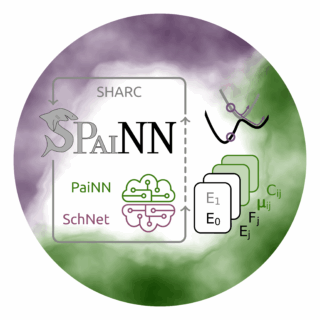
SPaiNN for machine learning driven excited-state dynamics
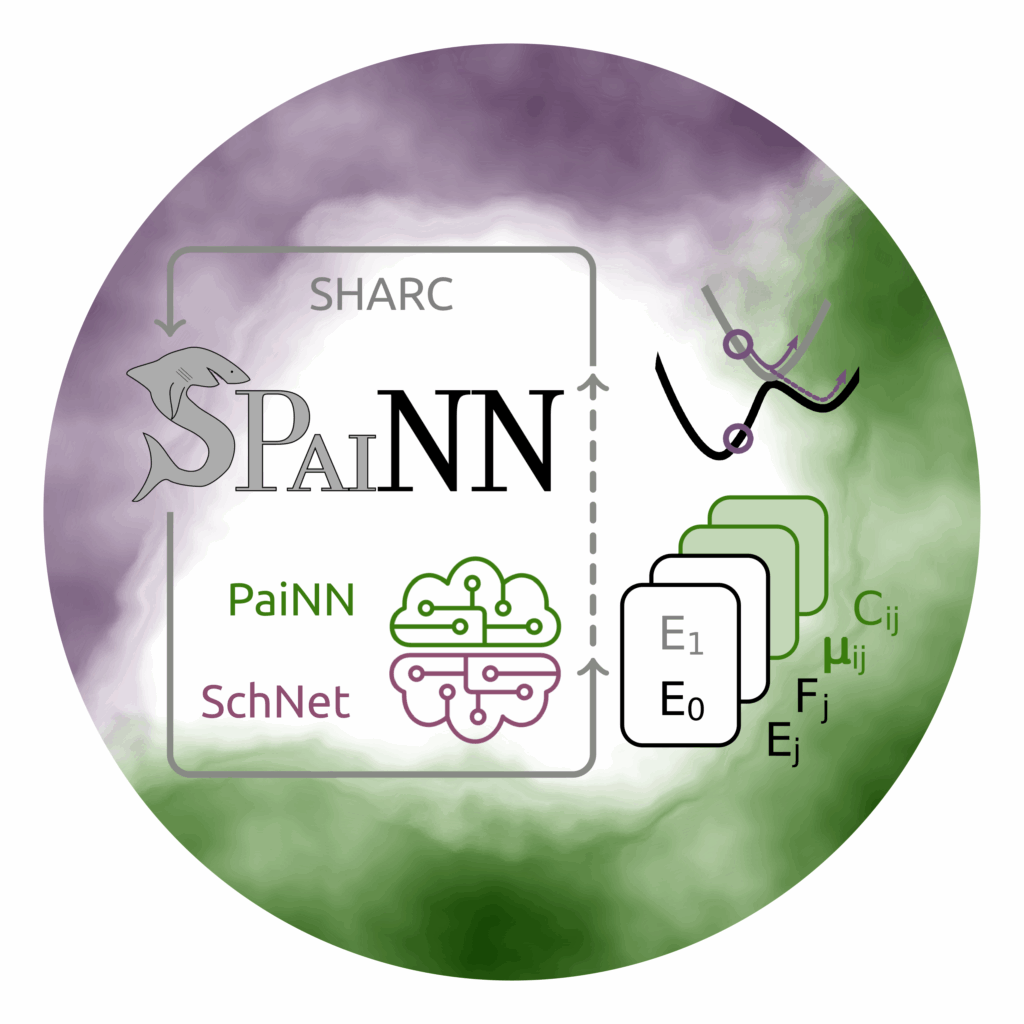
Meet SPaiNN, our open-source Python toolkit for machine learning driven excited-state dynamics!
Team
Head of the Group
Carolin Müller, Jun.-Prof.
E-Mail: carolin.cpc.mueller@fau.de
Office: Computer-Chemie-Centrum (CCC), 2.201B
Isabelle Schraufstetter, secretary
E-Mail: ccc@fau.de
Office: Computer-Chemie-Centrum (CCC), 2.111
Phone: 09131-85-20400
Researcher
Debabrata Halder, Postdoctoral Researcher (EAM Starting Grant)
E-Mail: debabrata.halder@fau.de
Office: Computer-Chemie-Centrum (CCC), 2.306
Kevin Höllring, Postdoctoral Researcher (ChemPrint, CRC 1719)
E-Mail: kevin.hoellring@fau.de
Office: Computer-Chemie-Centrum (CCC), 2.306
Theodor Everley Röhrkasten, PhD student
E-Mail: theodor.roehrkasten@fau.de
Office: Computer-Chemie-Centrum (CCC), 2.306
Martina Hartinger, PhD student (FCI Kekulé Fellowship)
E-Mail: martina.hartinger@fau.de
Office: Computer-Chemie-Centrum (CCC), 2.306
Shi Hui Wong, PhD student (ChemPrint, CRC 1719)
E-Mail: shi.wong@fau.de
Office: Computer-Chemie-Centrum (CCC), 2.306
Vipul Kumar Ambasta, research assistant (eti)
E-Mail: vipul.kumar.ambasta@fau.de
Office: Computer-Chemie-Centrum (CCC), 2.306
Cansun Saglam, research/conference assistant (CCSC 2026)
E-Mail: cansun.saglam@fau.de
Office: Computer-Chemie-Centrum (CCC), 2.306
Connor Forster, research assistant
E-Mail: connor.forster@fau.de
Office: Computer-Chemie-Centrum (CCC), 2.306
Undergraduate and Graduate Students
M. Sc. Chemie / Chemistry
- Shi Hui Wong
M. Sc. Artificial Intelligence
- Fariba Mohammadipour
- Qingwen Pang
- Mohammad Madahian
B. Sc. Chemie
- Katharina Fuchs
- Connor Forster
- Dario Karlovic
- Tobias Werner
Alumni
Nathan Pierrat, research student
E-Mail: nathan.pierrat@ens-paris-saclay.fr
Office: Computer-Chemie-Centrum (CCC), 2.306