ak-mandel

Jakob Reichstein was just awarded with a best oral presentation diploma in the section Nanochemistry and Nanomaterials of the Mendeleev conference 2021 held in St. Petersburg, where several members of our group took part remotely and gave talks.  

We co-authored a paper with the Fraunhofer ISC which reports that abrasive blasting of lithium metal surfaces yields clean and 3D structured lithium metal anodes with superior properties for batteries. The article just got accepted by Energy Technologies and can be found here.

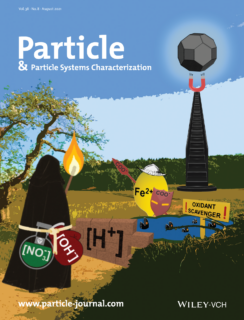
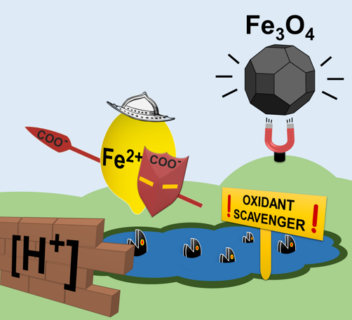
Our article Overcoming the Inhibition Effects of Citrate: Precipitation of Ferromagnetic Magnetite Nanoparticles with Tunable Morphology, Magnetic Properties and Surface Charge via Ferrous Citrate Oxidation is featured as back cover in Particle & Particle Systems Characterization.

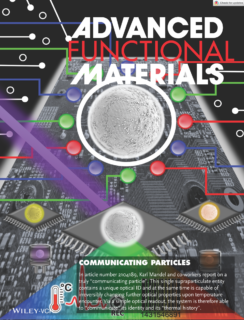
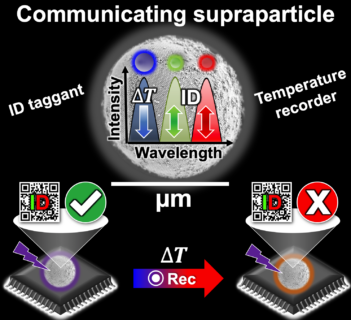
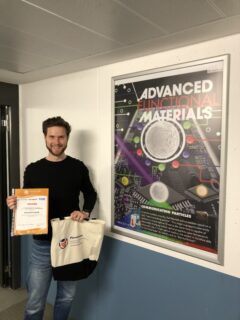
Our article Communicating Particles: Identification Taggant and Temperature Recorder in One Single Supraparticle is featured as frontispiece in Advanced Functional Materials.

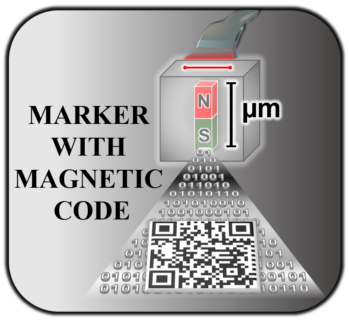
Our articles "Communicating Particles: Identification Taggant and Temperature Recorder in One Single Supraparticle" and "A Single Magnetic Particle with Nearly Unlimited Encoding Options" meet a very high intererst also in various science media outlets. We are happy to be featured in: &...

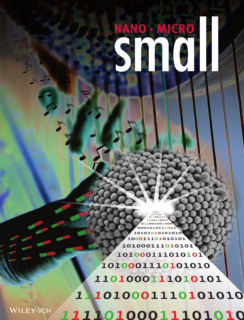
Our recent article about a single magnetic particle with nearly unlimited encoding options was featured as an inside back cover of Small. You can find the article here.

Advanced Functional Materials just accepted our work, in which we demonstrate for the first time the successful design of a true communicating particle which not only carries a unique ID but also a recorder functionality all in one entity. The full title is: “Communicating Particles: Identification ...

Citrates are very often used to surface-functionalize iron oxide nanoparticles after their synthesis. However, they are not employed directly during synthesis as it is commonly observed that they inhibit the precipitation of the iron species. In our latest paper, which was just accepted by Particle ...

We managed to create a single magnetic particle with over 77 billion encoding options. A breakthrough towards an all magnetic ID! The work can be found here.